
Hokkaido Prefecture [北海道]
Outline of Hokkaido Prefecture
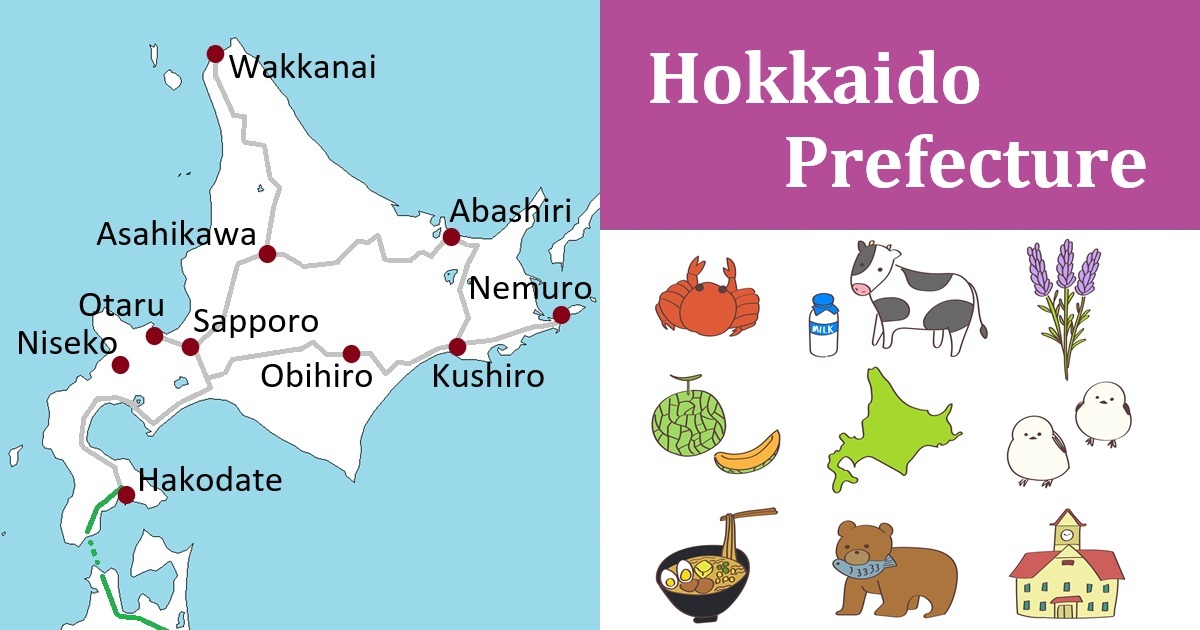
Hokkaido (北海道) is the northernmost island of Japan.
And Hokkaido Prefecture is the whole area of this island.
Hokkaido is a big island.
The main part of the island is roughly a diamond shape, and is over 500 km both from north to south and from east to west.
And, Oshima Peninsula like a tail of fish is attatched at the southwestern part of the island.
To the south of the Oshima Peninsula lies Honshu, across the Tsugaru Strait.
Both of the islands are connected by Seikan Tunnel, which is an undersea tunnel for railway and is about 53.85 km long.
It is the longest undersea tunnel in the world.
To the north of Hokkaido, there is Sakhalin Island.
To the east, there are Kurile Islands.
Now, both of them are under Russian rule.
But main four islands in the south part of Kurile Islands were occupied by Russia in the confusion around the end of the World War II in 1945.
So Japan has demanded the return of the islands, but Russia is still refusing.
Originally, Ainu people had been lived in Hokkaido.
This island had been called "Ezo" (蝦夷).
Around the 15th century, Japanese people came to Oshima peninsula from Honshu Island and settled down.
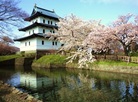
And the territory became Matsumae Domain as a samurai government in the 1600s, and the only castle in Hokkaido was built.
After the end of feudal Edo Period (1603-1868), modern Japanese government started the developement of Hokkaido from the 1870s.
Many pioneers came into Hokkaido, and Hokkaido developed.
Hokkaido is one of the Japan's major prefectures of rice production, but the more characteristic agriculture is large-scale farming and dairy.
These farming methods were learned during the pioneering era from Europe and the United States, which have similar climates.
Wheat, potato, sugar beet are the main products, and Hokkaido produces about a half of national production volume of milk.
Such productions and the natural features evoke the image of European rural area.
So the exoticism of Hokkaido attracts many people in the other area of Japan.
Tourist spots in Hokkaido
Central Hokkaido Southern Hokkaido Northern Hokkaido Eastern Hokkaido
Central Hokkaido
The central-western area of Hokkaido with the major city of Sapporo.
There is New Chitose Airport, the primary gateway to Hokkaido.
Sapporo city
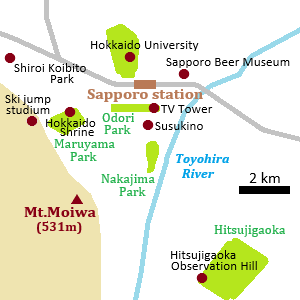
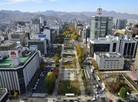
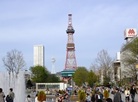
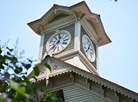
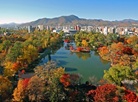
Sapporo (札幌) is the prefectural capital of Hokkaido, and is located at the southwest of the center in Hokkaido Island.
The population is about 1.9 million.
About 40% of Hokkaido's population is concentrated in Sapporo.
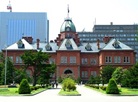
In 1869, the Development Commission was established in this place.
And, the town developed with Western technology.
Therefore, the atmosphere of the town is not traditional Japanese style but European.
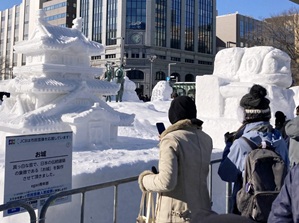
Photo by Sapporo City
Sapporo Snow Festival is held in early February.
It is the biggest festival of Hokkaido Prefecture in winter.
A lot of big snow statues are made in Odori Park, and many ice sculptures are displayed in Susukino.
Most of them are modeled after famous buildings or popular characters.
More than 2 million people visit every year during the one week period.
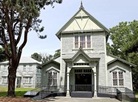
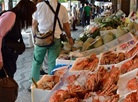
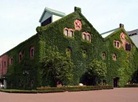
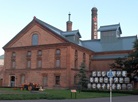
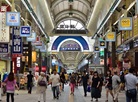
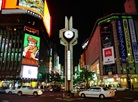
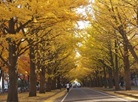

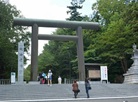
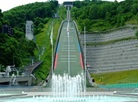
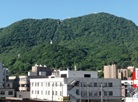
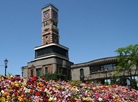
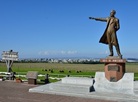
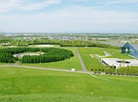
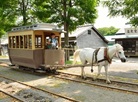
Otaru city
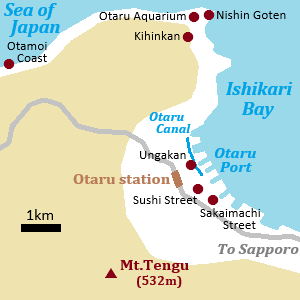
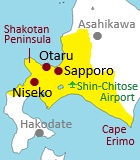
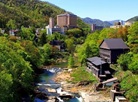
Otaru (小樽) is an old harbor city facing the Ishikari Bay.
It is located about 30 km west-northwest of Sapporo city.
Around the end of the 16th century, Japanese people found a good fishing ground of herring ("nishin" in Japanese) around this place.
A port was built here.
The Sea of Japan route was opened to transport herring and Hokkaido products from Otaru to Osaka, the distribution center of the time.
Then, Otaru developed as a herring town.
Now, there are still many spots that show the glory of that time.
Otaru is also known for its sushi.
The feature is that fish caught in the nearby sea is served fresh as sushi.
There are more than 20 sushi restaurants on the Sushi Street.
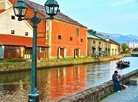
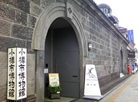
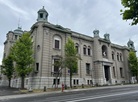
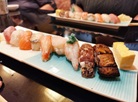
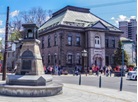
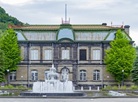
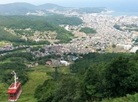
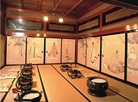
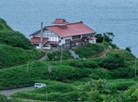
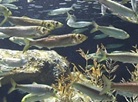
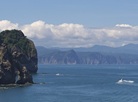
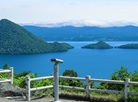
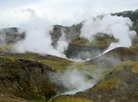
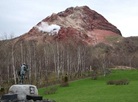
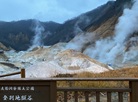
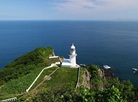
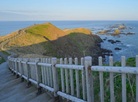
Various tourist spots in central Hokkaido
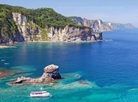
Southern Hokkaido
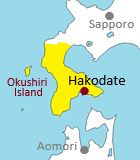
The area is the entire Oshima Peninsula.
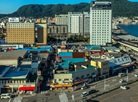
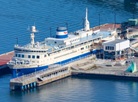
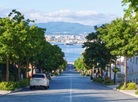
The main city is Hakodate on the south coast.
Hakodate city
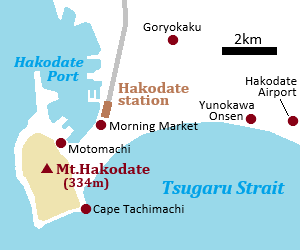
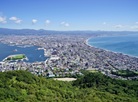
Hakodate (函館) is spread out on a sandbar connected to the former island of Mount Hakodate.
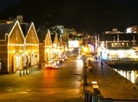
The night view from Mount Hakodate is one of the most popular views in Japan.
In the 17th century, this city was opened as a trading point in Hokkaido.
In 1859, Hakodate became one of the five ports for foreign trade after changing the policy of isolation.
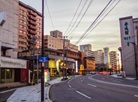
The ships from the United States, Britain, and Russia visited, and churches and consulates were set up there.
The atmosphere of that time remains in the city.
Hakodate is also a fishing town, especially the catch of squid is the best in Japan.
Hakodate Morning Market is a popular spot where those fresh products gather.
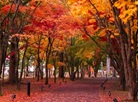
Various tourist spots in southern Hokkaido
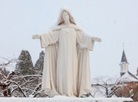
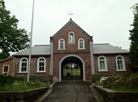
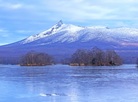
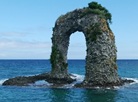
Northern Hokkaido
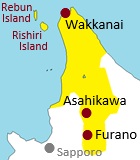
The area extending northward from Asahikawa city in the center of Hokkaido.
It is extremely cold in winter and is also an area of heavy snowfall.
Asahikawa city
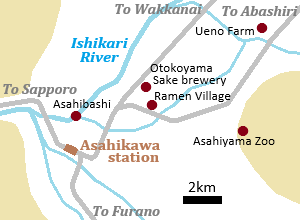
Asahikawa (旭川) is a city of commerce and industry with about 300,000 people.
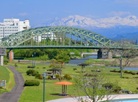
Ishikari River running through the city is the largest river in Hokkaido, and flows into the plains of Sapporo city about 130 km downstream.
Asahikawa is a transportation hub where railway lines diverge to all parts of northern and eastern Hokkaido.
It is close to Daisetsuzan, a famous mountain in Hokkaido.
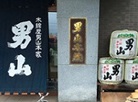
So, sake brewing using the water from Daisetsuzan is popular.
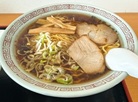
Asahikawa ramen has a different taste from the famous Sapporo ramen, and there are many specialty shops in the city.
Asahiyama Zoo is popular for its "behavioral exhibits" that you can see the natural movements and habits of animals up close.

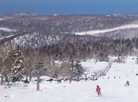
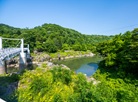
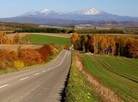
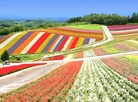
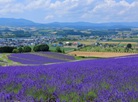
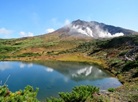
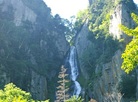
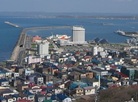
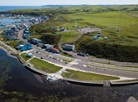
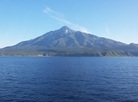
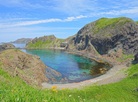
Various tourist spots in northern Hokkaido
Eastern Hokkaido
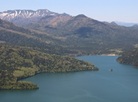
A vast area covering roughly the eastern half of Hokkaido.
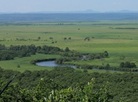
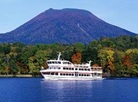
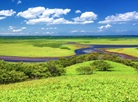
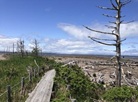
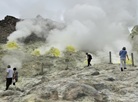
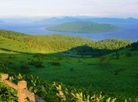
It is rich in nature with few cities and vast expanses of hills, wetlands, volcanoes and lakes.
Obihiro city
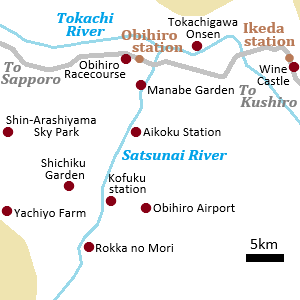
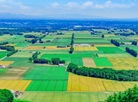
Obihiro (帯広) is a city located in a wide plain on the east side of the Hidaka Mountain Range that extends south from the center of Hokkaido.
This vast area of land is called Tokachi region, and there is large-scale farming and dairy farming here.
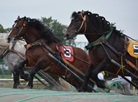
There is Obihiro Racecourse where the world's only Ban'ei horse race (Draft horse racing) is held.
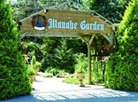
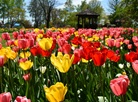
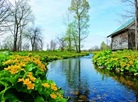
There are large private gardens for tourists that take advantage of the vast grounds.
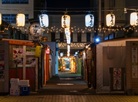
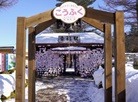
There are the spots where the station names of a discontinued Japanese National Railways line are very nice and many people have been visiting since long ago.
Abashiri city
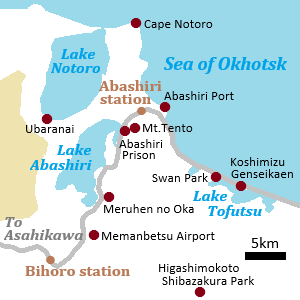
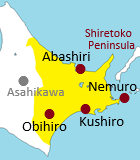
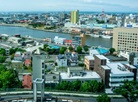
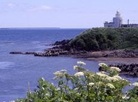
Abashiri (網走) is a city on the Sea of Okhotsk in the northeastern part of Hokkaido.
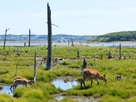
The city is surrounded by brackish water lakes connected to the sea, such as Lake Abashiri, Lake Notoro, and Lake Tofutsu.
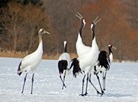
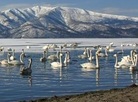
Valuable plants grow wild in these lakes, and many migratory birds fly in.
Therefore, this area is designated as a quasi-national park.
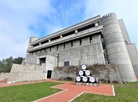
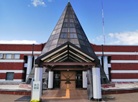
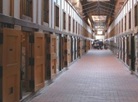
In 1890, a prison for felons and political prisoner was established in Abashiri.
In 1965, a movie about the prison became a hit and Abashiri Prison became famous.
It is a tourist attraction in Abashiri.
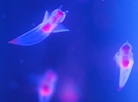
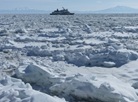
Drift ice ("Ryuhyo" in Japanese) rushes to the Okhotsk coast around Abashiri from late January to February.
This is a view of nature that can only be seen here in winter.

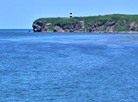
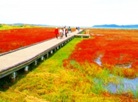
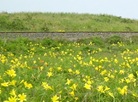
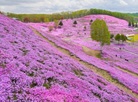
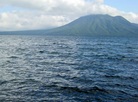
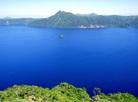
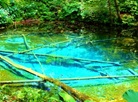
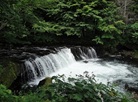
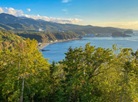
Various tourist spots in eastern Hokkaido

Transportation in Hokkaido
Airport
Most major airport is Shin-Chitose Airport (New Chitose Airport in English).
It is located in Chitose city about 40 km southeast of Sapporo city.
It has some international flights and many domestic flights.
Especially, the flights between Shin-Chitose and Haneda Airport in Tokyo are very frequent.
To Sapporo, it takes about 40 minutes by JR rapid train.
And many buses to Sapporo and some other city are operated.
There are six local airports in wide Hokkaido.
They are Hakodate, Asahikawa, Wakkanai, Obihiro, Kushiro, and Memanbestu (near Abashiri city).
They have the flights from Tokyo, Osaka, Nagoya, and Sapporo.
Railway
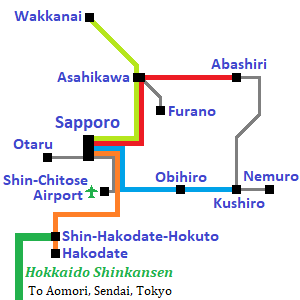
Main railway lines of JR in Hokkaido.
The colored lines are the route of main limited express. Thin grey lines are local trains.
Hokkaido Shinkansen comes from Tokyo to Shin-Hakodate-Hokuto near Hakodate city.
You can transfer to JR limited express there.
It takes about 4 to 4.5 hours from Tokyo.
Main limited expresses start at Sapporo.
Between Sapporo and Asahikawa, one or two limited express are operated every hour.
The other limited express are operated to Hakodate and Kushiro about 5-7 times a day, and to Abashiri and Wakkanai 2-3 times a day.
No night train is operated.
Railway passes for travel around Hokkaido
Local foods in Hokkaido Prefecture
Sushi in Otaru city
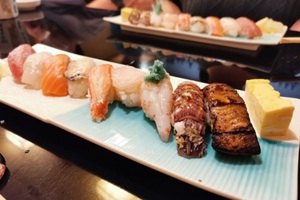
Sushi is a popular Japanese food and you can eat it everywhere in Japan.
Otaru is a small city facing Ishikari Bay, and the sushi restaurants can get fish caught in the sea very quickly.
Because of its freshness, ingredients boiled or cooked in Tokyo can be served raw.
Also, the fishes unique to this sea such as "shako" (mantis shrimp) and "nishin" (herring), which are not served in other areas, are used.
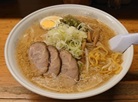
Sapporo ramen
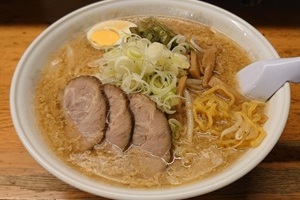
Sapporo ramen is regarded as one of Japanese 3 big ramen (Chinese noodle developed in Japan).
(Other 2 ramen are "Kitagata" and "Hakata")
The noodle is deep yellow and thick.
Commonly fried bean sprout are topped, and sometimes butter and corn are added.
Sapporo ramen was born and developed in Sapporo, but it is currently one of the main type of ramen in Japan, so we can find many restaurants of "Sapporo ramen" all over Japan.
Of course, there are a lot of restaurants in Sapporo.
Especially there are some famous restaurans along the Sapporo ramen yokocho.
Asahikawa ramen
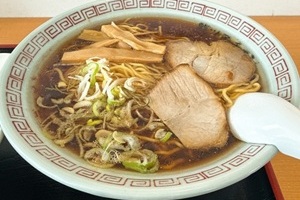
Asahikawa is the city with many ramen shops along with Sapporo in Hokkaido.
The soup of Asahikawa ramen is made from pork bones and fish, but we feel little smell of fish.
Lard is added to the soup, then it slowly gets cold.
Usually the varieties of flavors for ramen are the "shoyu" (soy sauce), "salt" and "miso", and the basic taste of Asahikawa ramen is "shoyu".
Of course, we can taste the ramen of "salt" or "miso" flavor.
Soup curry
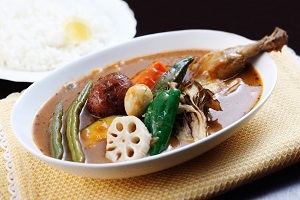
Soup Curry is the curry-flavored soup, and is similar to the curry of southern India or Southerneast Asia.
Originally, it began to serve at a curry restaurant in Sapporo in the 1970s, then started a boom among young ladies in the 1990s, because some smart restaurants began to serve it.
Japanese people love curry, but we can find soup curry almost at only Sapporo.
In 2008, "Soup curry yokocho" which has some soup curry restaurans has opened near Nijo market.
Jingisukan
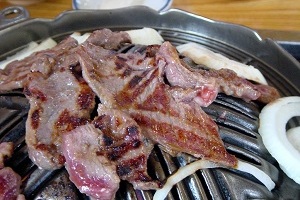
Jingisukan is a barbecue on hemispherical iron plate.
Commonly, mutton or lamb and vegetables are used.
You can eat not only in Sapporo but also in whole Hokkaido.
Jingisukan is the Japanese name of the medieval Mongolian hero "Genghis Khan", but there is no connection to the hero.
Meats are cooked on the hemispherical part.
And vegetables are cooked at the foot of the hemispherical part.
During the cooking, the tasty juice of the meat flows down and vegetables are seasoned automatically.
Butadon
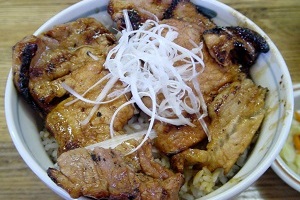
Butadon is a specialty of Obihiro city.
"Buta" means "pig" in Japanese, but is often used as the meaning of "pork".
"Don" is short for "donburi", so it means rice bowl.
Grilled pork is combined with salty-sweet sauce of shoyu (soy sauce) and sugar, and they are topped on hot rice in a bowl.
Recently most gyudon chain stores across Japan serve the "butadon" in addition to "gyudon".
But, they only replace beef with pork.
Butadon in Obihiro is different from those.