
Nagano Prefecture [長野]
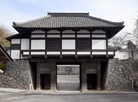
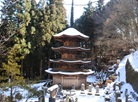
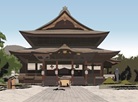
Tourist spots in Nagano Prefecture
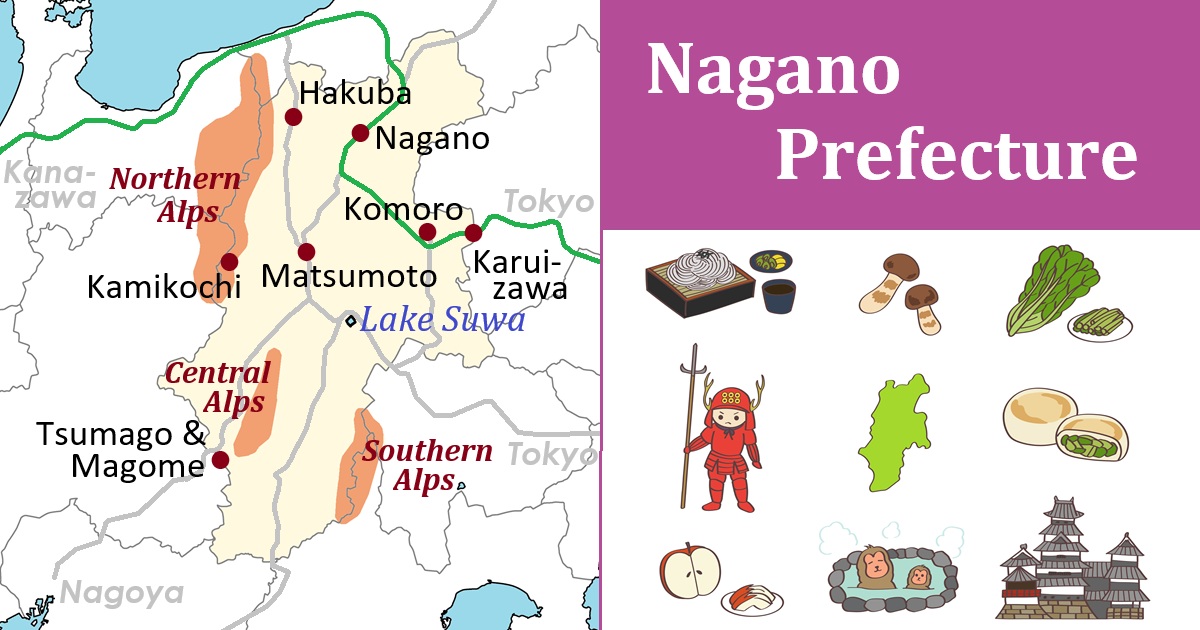
Northern and Eastern areas in Nagano Prefecture
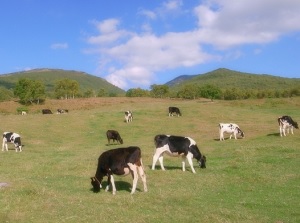
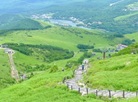
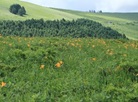
There are many mountains, plateaus, and basins in this region.
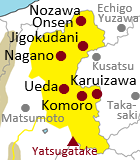
There is Karuizawa, a popular highland resort, at the eastern edge, and Chikuma River originates nearby.
Chikuma River first flows through this area toward the northwest, and then changes course to flow toward the northeast.
Along this river, the historic towns such as Komoro and Ueda are scattered, and there is Nagano city which is the prefectural capital in the northern area.
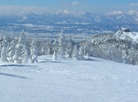
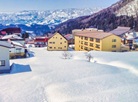
The farther north you go, the more snow falls in winter.
Hokuriku Shinkansen from Tokyo runs along the Chikuma River.

Western area in Nagano Prefecture
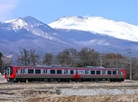
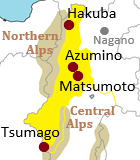
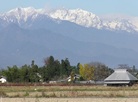
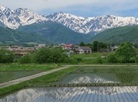
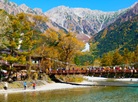
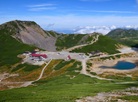
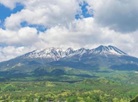
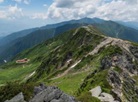
Along the western border of Nagano Prefecture, the mountains of Northern Alps stretch from north to south in a long chain.
There are several beautiful mountains over 3,000 meters high, and this is a popular area among the climbers.
Central Alps also run through the southern part of this area.
The towns and villages are dotted throughout the long area between them.
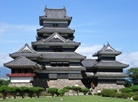
The main city is Matsumoto and JR Chuo Line comes to here from Tokyo.
In addition, the local JR lines run north to south through this area.

Southern area in Nagano Prefecture
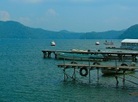
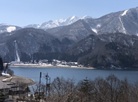
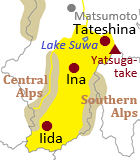
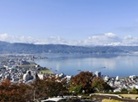
Lake Suwa is located in the central part of Nagano Prefecture.
Tenryu River flows southward from this lake.
Tenryu River flows between Central Alps and Southern Alps, and it forms a long valley from north to south.
This area is known as the Ina region and is dotted with towns such as Ina city and Iida city.
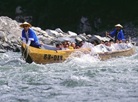
Local foods in Nagano Prefecture
Shinshu soba
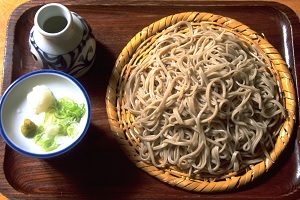
Photo by Nagano Tourism Organization
Nagano Prefecture is a cool land, so buckwheat has been cultivated from old times.
Buckwheat is mainly eaten as the form of noodle in Japan, and it is said that the method originated from Nagano Prefecture in the 17th century.
Soba is now enjoyed throughout the country, but in that sense, Nagano Prefecture can be called the home of soba.
"Shinshu" is the old name of Nagano Prefecture, and "soba" means "buckwheat" in Japanese.
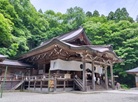
In particular, "Togakushi Soba" produced in the area around Mount Togakushi in the northwestern part of Nagano city is recognized as a distinct brand among Shinshu soba.
We can eat the tasty soba noodle across Nagano Prefecture.
Nozawana-zuke
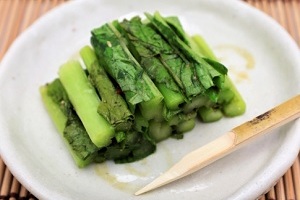
Nozawana is a Japanese leaf vegetable.
It is a cruciferous plant and its leaves are about 60 to 90 centimeters.
It is mainly cultivated around Nozawa-Onsen village in the northern part of Nagano Prefecture.
Nozawana-zuke is pickled nozawana.
Commonly its stems and leaves are pickled with salt.
Because it is created in a cold environment, it is fermented only a little.
So, the taste is plain and the flavor is mild.
In Nozawa hot spring resort, most of hotels, ryokans, restaurants and pubs serve the Nozawana-zuke.
Oyaki
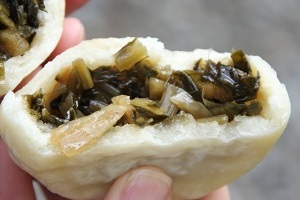
Oyaki is a Japanese dumpling made from a fermented buckwheat dough wrapped around a filling of Japanese vegetables, fruit, or "an" (sweet bean jam) then roasted on an iron pan.
It is made across Nagano Prefecture.
Especially, as a local specialty, oyaki filled with stir-fried nozawana is very popular.
Because Nagano Prefecture is very mountainous and have a cold climate, it has been a small crop of rice.
So, oyaki has been eaten as a substitute food.
Gohei-mochi
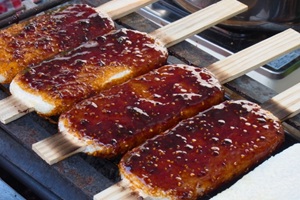
Gohei-mochi is a skewered rice cake, and had been made in the south part of Nagano Prefecture since the 18th century.
Boiled glutinous rice is stuck on a stick.
Generally, the shape of the cake is flat oval.
And it is coated with the soy sauce with sugar, cracked walnut and sesami.
Then it is grilled.
Gohei-mochi is made not only in Nagano Prefecture but also in the mountainous regions of neighboring Gifu and Aichi prefectures.
Local specialties in Nagano Prefecture
Kiso lacquerware
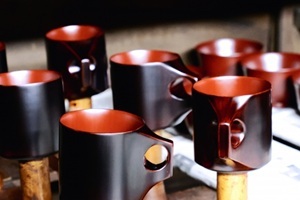
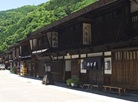
Kiso lacquerware has been produced in the Kiso Valley, which flourished as a post town along old "Nakasendo" road in the south-central part of the prefecture.
The practical items have traditionally been the main souvenirs made for travelers.
However, the products are durable, and unique traditional techniques are used to achieve this.