
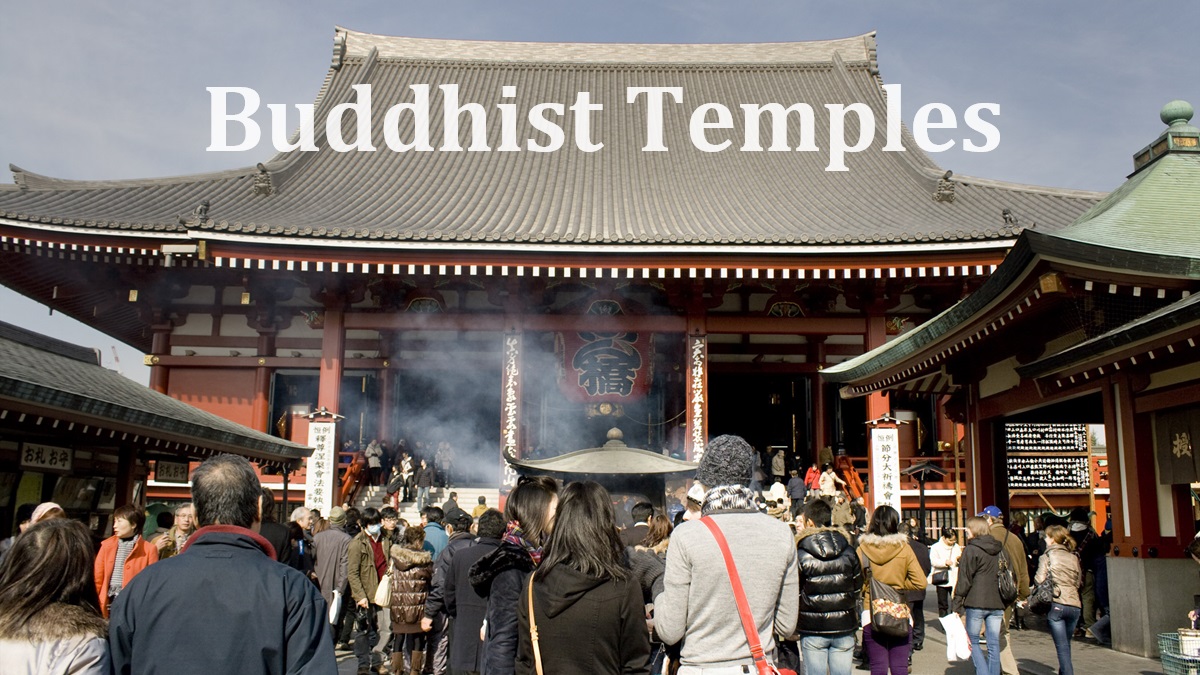
Famous Buddhist temples in Japan
Nara city Kyoto city Koyasan Kamakura city
Famous Buddhist temples in each region


About Japanese Buddhist temple
Nanzenji temple in Kyoto
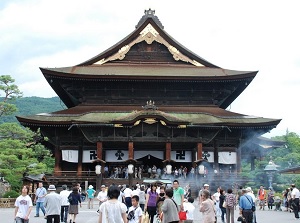
Naritasan Shinshoji in Chiba Pref.
Buddhist temple is the temple for Buddhism.
In Japanese, the end of temple name is "ji", "tera" or "dera".
Buddhism is a religion founded by Buddha in ancient India in the 6th century BC.
It was introduced to Japan through China in the the 6th century AC, and it spread throughout the country.
There are about 75,000 Buddhist temples in Japan.
Buddhist temple enshrines the statues imitating the figure of Buddha.
The priests read the sutras that Buddha preached the precepts.
According to interpretations of preaching, there are many sects in Japan.
"Zen" is also one of the sects.
The manner of worshipping is to hold the palms and fingers of both hands together and make a request to Buddha.
If a big incense burner is making smoke in front of worship hall, purify yourself by the smoke.
In Buddhism, it is said that the smoke of insence sends your wish to the heaven.
Mainly, you pray out of the main hall.
But, when you can observe the sacred rooms or experience Buddhist service inside the temple, you must take off your shoes at the entrance and enter the building.
After worshipping, worshipper can buy the lucky charm and draw "Omikuji" (a fortune-telling slip).
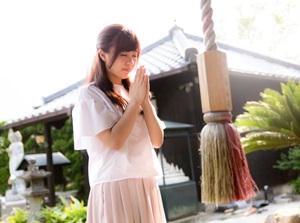
Worshipping in Buddhist temple
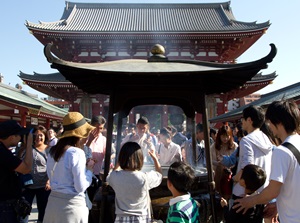
Incense burner in Sensoji in Tokyo
Buddhist temple is not a sightseeing facility.
It is the sacred place to pray, and the worshippers can see the objects of worship and the facilities.
Therefore, you are required to act with moderation and good manner in the site.
There are historic buildings, artistic Buddhist sculpture, Japanese paintings, Japanese gardens in many temples.
So, you can see many Japanese traditional arts in Buddhist temple.
In some major temples, it is prohibited to take a picture of hidden Buddhist statues and sacred facilities.
You must observe the rule.
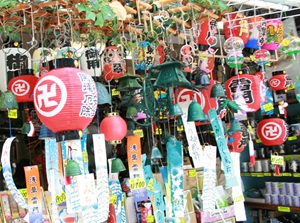 Souvenirs with Manji mark in Asakusa
By the way, you may find the mark "卍" on the facility in Buddhist temple.
The mark is called "Manji" in Japanese.
It is similar to the sign of infamous Nazi, but it's quite the opposite.
Manji is a happy mark for Buddhism and Hinduism in ancient India.
So, it has been used in the Buddhist temples in Japan.
In the Japanese maps, Manji is used as the map symbol of Buddhist temple.
Historical cities of Buddhist temples
Temples in Nara city
Nara is the first full-fledged capital city in Japan.
The period was from 710 to 794.
Buddhism was introduced from China in the middle of the 6th century.
And, it became the the basis of the government.
Some Buddhist temples were built by the order of the emperors.
So, existing temples in Nara are almost the oldest in Japan.
Many of them are designated as World heritage Site.
Todaiji (東大寺)
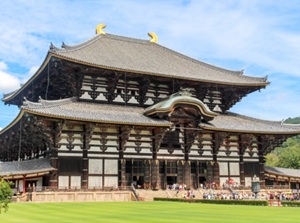
Todaiji, Great Buddha Hall
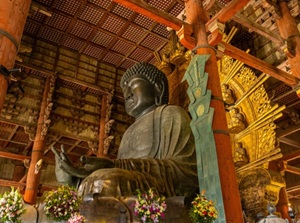
Todaiji, Great Buddha
Todaiji is located in the north part of Nara Park.
The temple was constructed by Emperor Shoumu.
The construction started in 743 and the temple was completed in 752.
The famous Great Buddha was completed in 758.
Various old temples are dotted in the wide site and the Great Buddha Hall is in the center of the site.
Many buildings, Buddha statues and so on are designated as national treasures and important cultural properties.
Kofukuji (興福寺)
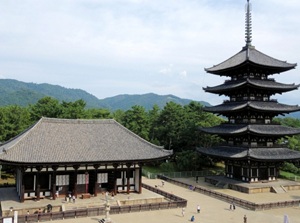
Kofukuji is a Buddhist temple in the west part of Nara Park and is rather near the center of Nara city.
The original temple was built in Kyoto in 669 and was moved to Nara because of the transfer of the capital to Nara in 710.
There are many instances of fire but it was reconstructed on every occasion.
Many buildings and the Buddha statues are desinated as the national treasures.
Toshodaiji (唐招提寺)
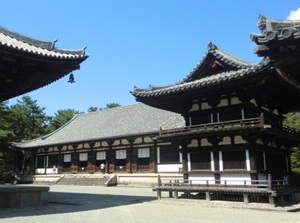
Toshodaiji is a Buddhist temple in the suburbs of Nara city.
It was founded in 759 by a high priest Ganjin.
He was the famous high priest in Tang (current China) and he was invited by Japanese priests.
After the dangerous voyage, he arrived at Nara in 754 and taught Buddhism for Japanese priests.
This temple was built for Ganjin by the Emperor.
He worked for Japanese Buddhism and died in this temple in 763.
Yakushiji (薬師寺)
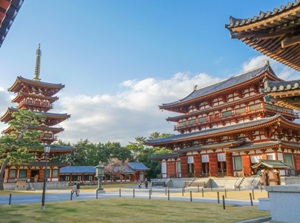
Yakushiji is a Buddhist temple to The south of Toshodaiji.
The original temple was founded by Emperor Tenmu in Asuka area about 25 km south of Nara city in 680.
Nara became the capital in 710, so this temple was moved to this place in 718.
Yakushi Nyorai was enshrined and it is the god of health and medicine.
Horyuji (法隆寺)

Image of Horyuji
Horyuji is a Buddhist temple located about 10 km southwest of Nara city.
It was founded in 607, so the buildings are famous as the oldest wooden construction of all existing in the world.
There are western site and eastern site, and many important buildings are in the both site.
Most of them are designated national treasures.
In Horyuji, taking pictures is strictly prohibited in the site.
Temples in Kyoto city
Kyoto became the capital city from Nara in 794, and lasted until 1868 for over 1,000 years.
The court nobles built the Buddist temples as symbols of power, so there are many temples in Kyoto.
The following are popular in many temples in and around Kyoto.
Sanjusangen-do (三十三間堂)
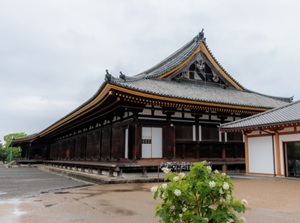
Sanjusangen-do is locates to the east of Kyoto station.
The temple was built in 1266.
The temple name means "temple with 33 column spacings", so the main temple is about 120 meters long.
It is designated a national treasure.
1,001 wooden standing statues of Senju-Kannon are enshrined orderly in the long temple.
The scene is spectacular.
Kiyomizu-dera (清水寺)
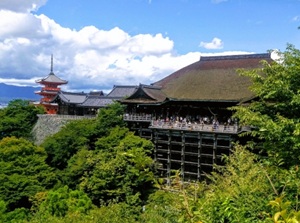
Kiyomizu-dera is on the slope of the mountainside in Higashiyama area in the eastern part of central Kyoto.
It was founded in 778 before transferring of the national capital from Nara to Kyoto in 794.
There are various buildings along the slope, and there is the main temple at the highest position.
A broad terrace attached in front of the temple is very attractive.
And some approaches to the temple are also popular.
Nanzenji (南禅寺)
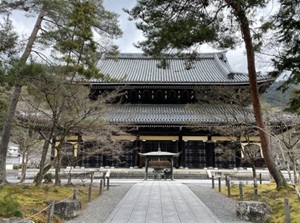
Nanzenji is a large temple located in the northeastern part of central Kyoto.
The temple was built in the 1290s and was the first Zen temple by the order of emperor.
In the wide site, there are many buildings.
There is the big gate "Sanmon" and the visitor can enter the inside.
The main temple "Houjou" is designated a national treasure.
Ginkakuji (銀閣寺)
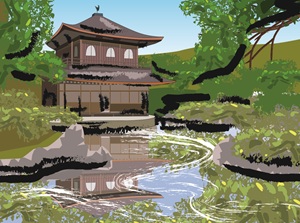
Image of Ginkajuji
Ginkakuji is located to the north of Nanzenji.
The formal name is Jishoji (慈照寺).
The temple was originally the villa built by retired Shogun in 1483, and it was changed to Zen temple after his death.
Therefore, the villa called Kannon-den is the center of the temple.
Japanese gardens are set up around the villa.
Ruriko-in (瑠璃光院)
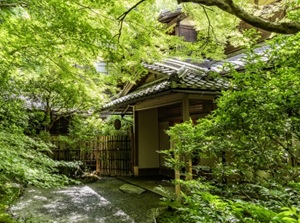
Ruriko-in
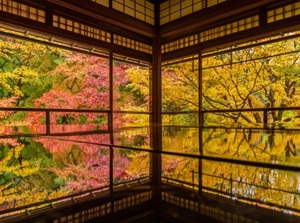
View of the garden in autumn
Ruriko-in is located in the northeastern suburbs of central Kyoto.
It was a villa built in the 19th century, and it became a Buddhist temple in 2005.
The Japanese garden is very attractive, and the view from the Japanese room is artistic.
This temple became popular rapidly by social media.
Sanzen-in (三千院)
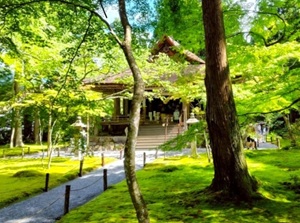
Sanzen-in is an old Buddhist temple in Ohara district to the north of central Kyoto.
The temple was founded in Mt.Hiei near Ohara district in 788.
The central temple "Oujou-Gokurakuin" as a training hall was built in current site in the 12th century.
And, the main temple was also moved to Ohara in 1871 and Sanzen-in was formed.
The Japanese gardens covered with moss are beautiful.
Kinkakuji (金閣寺)

Kinkakuji is located in the northwestern part of central Kyoto.
The formal name is Rokuonji (鹿苑寺).
The main temple is covered with golden leaves, so the beautiful scenery of the temple is popular even with foreigners.
The temple was originally the gorgeous villa built by retired Shogun in 1397.
It was changed to Zen temple after his death.
The temple had been designated a national treasure.
But it was burnt down by arson in 1950, so the news shocked the people and the nation.
Current temple was restored in 1955.
Ryoanji (龍安寺)

Ryoanji

Sekitei in Ryoanji
Ryoanji is a Zen Buddhist temple located to the west of Kinkakuji.
It was founded in 1450.
Most of the buildings were destroyed by fire in 1797, and the main temple was rebuilt after that.
The rock garden "Sekitei" is well-known.
With seeing the simple but meaningful garden, we can enjoy thinking something silently.
Toji (東寺)
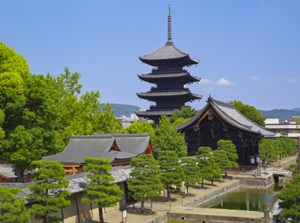
Toji is the oldest temple in Kyoto, and it is to the southwes of Kyoto station.
It was built in 796 when Kyoto city was constructed as the capital.
Many buildings in the temple are designated as national treasures, and the Five-story pagoda is the highest in Japan.
Byodo-in (平等院)
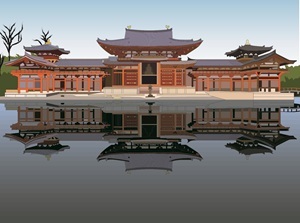
Image of Byuo-in Hoodo
Byodo-in is a Buddhist temple in Uji city to the south of Kyoto city.
Since the 9th century, Uji had been the resort area of the nobility in Kyoto.
Originally, this temple was one of many villas for the nobility.
After the owner died, the son changed this villa to a Buddhist temple in 1052.
There is the central hall "Hoodo" facing a pond and a few temples are behind it.
Hoodo is designated as a national treasure.
Koyasan
Koyasan (高野山, Wakayama Pref.) is a sacred town of Buddhism in the mountain.
In the 9th century, Kuukai (空海) who was one of the greatest Buddhist priests in Japan constructed the town to practice Buddhistic austerities.
It is located in a small basin about 800 meters above sea level surrounded by mountains.
There are 117 temples in the area about 2 kilometers from east to west, and many priests still practice asceticism.
There is no hotel and ryokan, so if you want to stay in this area, you must stay in "Shukubou" which is the lodging facility for worshipper in the temple.
Kongobuji (金剛峯寺)
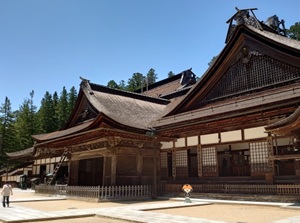
Main temple of Kongobuji

Buildings in Danjo-Garan
Kongobuji is the central temple, and Koyasan itself is the site of Kongobuji.
It was founded in 816.
There is the main temple in the center of Koyasan.
To the west, there is Danjo-Garan (壇上伽藍) area that important sacred buildings are set up.
To the east, there is Okunoin (奥之院) area.
It is a great cemetery and there are about 200,000 gravestones.
At the innermost place, there is a small temple where Kuukai was dead.
Temples in Kamakura
Kamakura (鎌倉, Kanagawa Pref.) is a city located about 50 km south of Tokyo, and faces Sagami Bay.
The first samurai government had been placed in this city from 1185 to 1333.
The ruin of the government is not seen, but many Buddhist temples were built in the city since the period.
Now, there are about 110 Buddhist temples in Kamakura.
Kenchoji (建長寺)

Kenchoji is a Buddhist temple located in the northern part of central Kamakura.
It is the first Zen temple in Japan, and was founded by the regent of Kamakura government in 1253.
It is a large temple, and there are two big gates, Buddhist temple (Butsuden), lecture hall (Hattou), and the residence of the chief priest (Houjou) are built on a line.
Hase-dera (長谷寺)
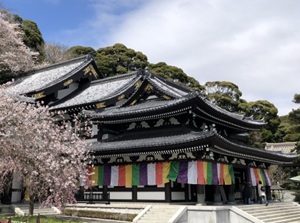
Hase-dera is a Buddhist temple located near the coast.
There is a legend that two Buddha statue were created in 721 and one of them were enshrined in Hase-dera in Nara Prefecture and another statue was floated in the sea, was washed up on the shore near Kamakura.
And, it is said that the temple to enshrine the statue was built in 736 and the name of Hase-dera was given to the temple.
The temple is also called "Temple of flower" and various flowers and blossoms bloom through a year.
Great Buddha of Kamakura (鎌倉大仏)
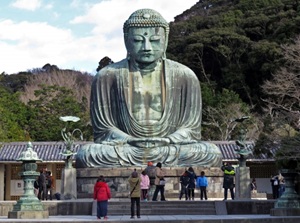
Great Buddha of Kamakura is located to the north of Hase-dera.
It is said that Kotokuin temple (高徳院) was founded in the 12th century.
This Buddha statue was created as the principal image in the middle of the 13th century.
Kotokuin temple was destroyed by great earthquake and tsunami in the late 15th century.
Since that, the Buddha statue has been sitting on the place.
This is designated as a national treasure.
Buddhist temples in eastern Japan
Popular Buddhist temples in Tohoku Region
Osorezan (恐山, Aomori Pref.)
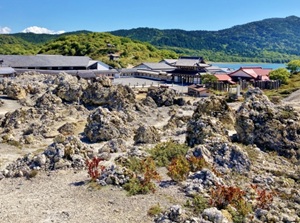
Osorezan is a mysterious holy place in a caldera volcano located in Shimokita Peninsula in the northeastern part of Aomori Prefecture.
The temple was founded in 862.
It is by the caldera lake, and the surrounding scenery looks like the world after death.
This temple opens only from May to early November.
Chusonji (中尊寺, Iwate Pref.)
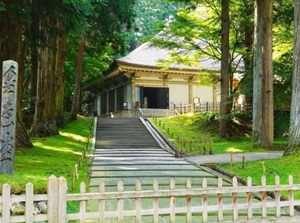
Chusonji Konjikido
Chusonji is a Buddhist temple in Hiraizumi town in Iwate Prefecture.
It was built by Fujiwara Clan which was the strong lord family in this area in 1126.
The main temple "Konjikido" is covered with gold leaf.
It is in a covering construction and is the first national treasure in Japan.
Zuiganji (瑞巌寺, Miyagi Pref.)
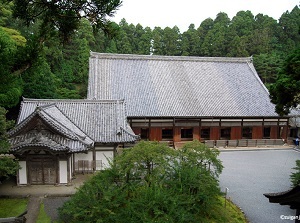
Photo by Zuiganji
Zuiganji is a Zen Buddhist temple near Matsushima coast which is a scenic spot located 20 km northeast of Sendai city.
It was founded in 828.
The main temple was renovated by Date Masamune who was the strong lord in this region in the 1600s.
The temples are designated as national treasures.
And many cultural properties are seen in the museum.
Entsuin (円通院, Miyagi Pref.)

Sankeiden in Entsuji
Entsuin is a Zen Buddhist temple and is next to Zuiganji.
This temple was founded as the mausoleum for a grandson of Date Masamune in 1647.
A small temple called Sankeiden is in the site, and it is the mausoleum.
In Sankeiden, a miniature shrine is enshrined.
The garden and the colored leaves in autumn are attractive.
Yamadera (山寺, Yamagata Pref.)
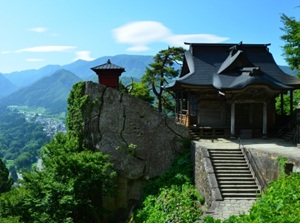
Yamadera is a buddhist temple on the mountainside in Yamagata Prefecture.
The formal name is Risshakuji (立石寺)
It was founded in 860.
The main temple is on the top of a cliff.
And some temples are dotted on the mountainside and the cliffs.
The visitors must climb the long approach to the temple over 1,000 flights of stairs.
Popular Buddhist temples in Kanto Region
Sensoji (浅草寺, Tokyo)
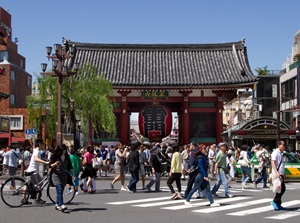
Kaminarion gate of Sensoji
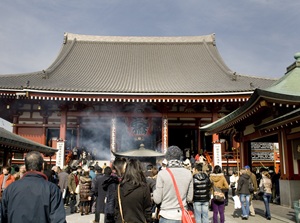
Main temple of Sensoji
Sensoji is one of famous sightseeing spots in Tokyo, and is the oldest Buddhist temple in Tokyo.
The first two Chinese characters "Senso" is also read as "Asakusa", so it is the district name.
In 628, fisherman brothers caught a Buddha statue in the net in Sumida River.
They became priests and their house was changed to a temple to enshrine the statue.
It was the original Sensoji.
The entrance gate is "Kaminarimon" and there is a popular approach "Nakamise" with many souvenir shops.
Zojoji (増上寺, Tokyo)
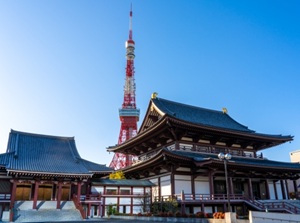
Main temple of Zojoji and Tokyo Tower
Zojoji is a Buddhist temple in the center of Tokyo and is just east of Tokyo Tower.
It was established in 1393.
It became the temple of Tokugawa family who governed Japan in the early 17th century, and some Shoguns of Tokugawa had been buried here.
Most buildings had been destroyed and lost by the US air raid of the World War II in 1945, and the mail hall was rebuilt in 1974.
Gotokuji (豪徳寺, Tokyo)
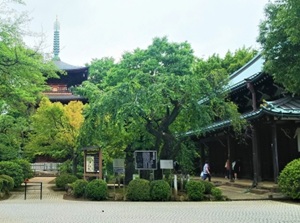
Gotokuji

Maneki-neko donated by the worshippers
Gotokuji is a Zen Buddhist temple established in 1480 and is in the western part of central Tokyo.
When a samurai lord passed by this temple, a cat in the temple beckoned to him.
The temple had been ruined, so he donated much money to this temple and it was rebuilt.
When the cat died, the priest built a small temple for the cat.
And the statue of the beckoning cat (Maneki-neko) was created.
The beckoning cats in Gotokuji have spread on social media in the world since 2010s.
So, this temple is more popular with foreign tourists than with Japanese people.
Kawasaki Daishi (川崎大師, Kanagawa Pref.)
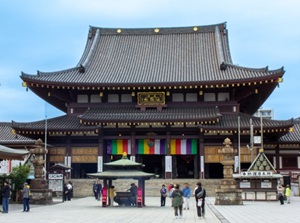
Kawasaki Daishi is in Kawasaki city just south of Tokyo.
It was founded in 1128.
But the temple were destroyed by air-raid in 1945 and many buildings were rebuilt after that.
The location is near Tokyo, so the number of visitors during the first three days of the New Year is one of the top of all temples and shrines in Japan.
Naritasan Shinshoji (成田山新勝寺, Chiba Pref.)
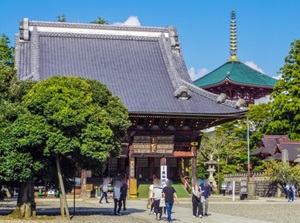
Naritasan Shinshoji is in Narita city about 60 km east of Tokyo and is near Narita In ternational Airport.
It was founded in the 10th century.
The precinct is relatively wide and there are some temples and a natural park.
The long approach to the temple is also popular, and there are many souvenir shops and restaurants.
This temple also has many visitors during the first three days of the New Year.
Popular temples in Koshinetsu Region
Zenkoji (善光寺, Nagano Pref.)

Image of the main temple of Zenkoji
Zenkoji is in the center Nagano city.
It was founded in 644.
A Buddhist statue from China in the 6th century is never unveiled.
Instead, the substitute statue made between the 11th and 13th century is unveiled every 7 years.
So, Zenkoji has been the important temple that Japanese people should visit once in a life.
Photography and video recording are prohibited inside the temple.
Kuonji (久遠寺, Yamanashi Pref.)
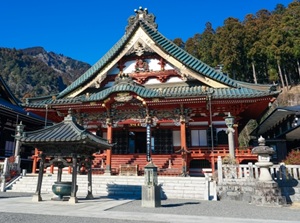
Kuonji is a Buddihst temple in Minobu town in the southern part of Yamanashi Prefecture.
It was founded by high priest Nichiren in 1244.
The main precinct is on the side of Mt. Minobu and the whole Mt. Minobu is the site.
There are many sub-temples are around the main temple and many monks are training.
There is a sacred temple "okunoin" on the top of the mountain and the worshipper can visit by ropeway.
Popular temples in Hokuriku Region
Zuiryuji (瑞龍寺, Toyama Pref.)
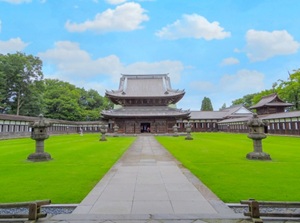
Zuiryuji is a Buddhist temple in Takaoka city in the western part of Toyama Prefecture.
It was built to pray for the dead soul of the lord of Takaoka in 1663.
Buddhist sanctum, Main Hall and main gate have been designated as national treasures.
Some buildings are connected with a corridor, and the inside space is wide.
The arrangement is imitative of the style of Chinese Buddhist temple.
Ninja-dera (忍者寺, Ishikawa Pref.)

Ninja-dera is the temple at the edge of Kanazawa city.
The real name is "Myoryuji"(妙立寺)
It was built for the defense of Kanazawa city in 1643.
It looks like a Buddhist temple, but samurais stationed in the building and there were various tricks and traps like Ninja house.
To enter this temple, you have to have an appointment to join the guided tour by only telephone.
Nata-dera (那谷寺, Ishikawa Pref.)
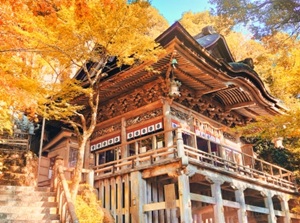
Nata-dera is the temple in Komatsu city to the south of Kanazawa.
It was founded in 717.
It had come to ruin by civil wars in the 14th century, but the lord of Kanazawa restored this temple in 1640.
The temple has a rich natural environment, and the scenery is like a Japanese garden.
Eiheiji (永平寺, Fukui Pref.)
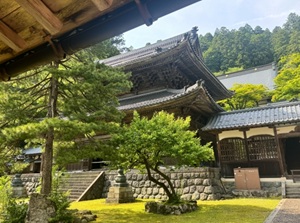
Eiheiji is a big Buddhist temple and is in Fukui city.
It is one of the head temples of the Soto sect of Zen Buddhism.
It was founded in 1244.
In the site, many temples are connected by corridors on the slope.
It is a Zen training hall, so we can see the working ascetic monks in the temple.
Popular temples in Tokai Region
Shuzenji (修禅寺, Shizuoka Pref.)
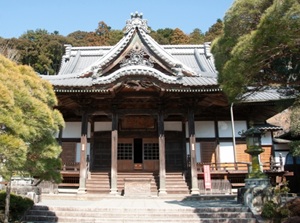
Shuzenji is a BUddhist temple in Izu city in the northern part of Izu Peninsula.
It was founded by high priest Kuukai in 807.
The main temple was rebuilt in 1883.
There is a legend that priest Kuukai broke a rock with his sacred stick and hot spring gushed here.
So, this area became a popular hot spring resort.
Toyokawa Inari (豊川稲荷, Aichi Pref.)
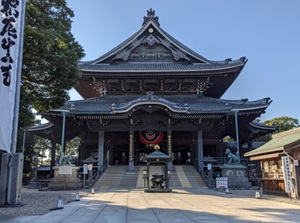
Toyokawa Inari
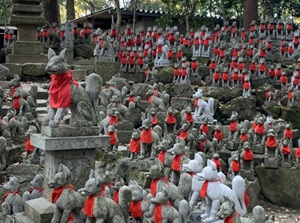
Fox statues donated by the worshippers
Toyokawa Inari is a Zen temple and is in Toyokawa city in the eastern part of Aichi Prefecture.
It was built in 1441.
"Inari" is a god of industry, so it is generally a Shinto shrine.
But this temple enshrines the Inari god.
So, there are "Torii" gates for Shinto along the approach.
And fox is the messenger of Inari god, so many fox statues are seen in the site.
Osu Kannon (大須観音, Aichi Pref.)
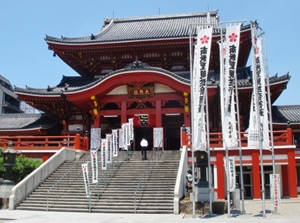
Osu Kannon is a Buddhest temple located in Osu district in the center of Nagoya city.
The original temple were founded in Gifu Prefecture in 1333.
After Nagoya Castle was built and the castle town was constructed, the temple was moved here by Tokugawa Ieyasu, the Shogun, in 1612.
The temple was destroyed by air raids in World War II, and was rebuilt in 1970.
Osu is a town of pop culture in Nagoya, and the temple is the symbol.
Buddhist temples in western Japan
Popular temples in Kansai Region
Shitennoji (四天王寺, Osaka city)

Shitennoji is a wide Buddhist temple in the southern part of central Osaka.
It was founded in 593, and it is one of the oldest temples in Japan.
Prince Shotoku created four Busshist statues when he was 14 years old.
When he became a regent at 19 years old, he founded this temple to ensrine the statues.
Current buildings are rebuilt around the 1960s.
Enryakuji (延暦寺, Shiga Pref.)
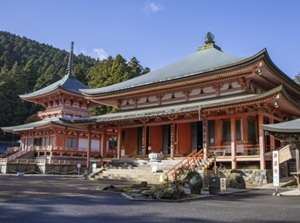
Enryakuji was founded in 822.
It is located near the top of Mt.Hiei rising between Otsu city near Lake Biwa and the eastern part of central Kyoto.
High priest Saicho learned Tendai Buddhism in China, and introduced it to Japan.
After his death, this temple was founded in accordance with his will.
The temple had produced many excellent priests.
Many priests are still doing hard training in this temple.
Mii-dera (三井寺, Shiga Pref.)
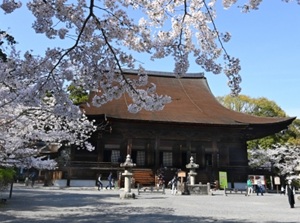
Mii-dera is a Buddhist temple in the center of Otsu city near Lake Biwa.
The formal name is "Onjoji" (園城寺)
This temple was founded in the 7th century.
Since the 9th century, the temple developed by many believer of imperial family, nobility and samurai.
But, the temple conflicted with strong Enryakuji, so it repeated the destruction and restoration.
there are many important buildings in the site.
Ishiyamadera (石山寺, Shiga Pref.)

Image of Ishiyamadera
Ishiyamadera is in Otsu city near Lake Biwa.
"Ishiyama" means "mountain of stone", so this temple is on the huge rock bed.
It was founded in 747.
Murasaki-Shikibu, a woman novelist, wrote the Japan's first (or the world's first) full-length novel in this temple in 1004.
So, this temple is known as temple of literature, and many flowers in the site are also beautiful.
Hase-dera (長谷寺, Nara Pref.)
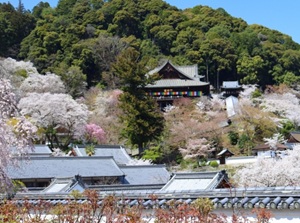
Hase-dera is a Buddhist temple in Sakurai city located about 25 km south of Nara city.
This temple was founded around the early 8th century.
It is said that two Buddha statues are created and one enshrined in this temple and another enshrined in Hase-dera in Kamakura.
But, this temple says that such legend is not unknown.
The temple is on the slope of mountain.
The main temple is designated as a national treasure, and has a terrace like Kiyomizu temple in Kyoto.
And, it has been known as Temple of flower.
Murouji (室生寺, Nara Pref.)

Murouji is a Buddhist temple and is located about 35 km southeast of Nara city.
The temple was founded around the 770s.
In Koyasan, women had not been allowed to visit until 1872.
But, Murouji belongs to the same Buddhist sect as Koyasan, but it had allowed the visit of women since ancient times.
So, Murouji is also called "Koyasan for women".
In the mountain, there are some buildings of national treasures.
Popular temples in Chugoku Region
Sanbutsuji (三仏寺, Tottori Pref.)
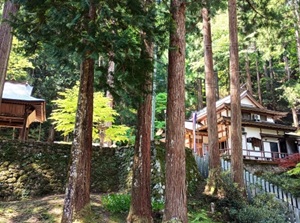
Sanbutsuji
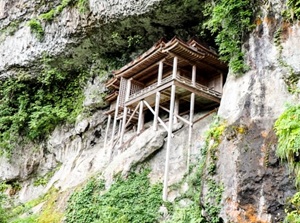
Nageiredo of Sanbutsuji
Sanbutsuji is a Buddhist temple located in Misasa town in Tottori Prefecture.
It is in the deep mountain.
The temple was founded in 706.
It had been one of the main temple of Japan's Shugendo (mountain asceticism) practice.
Some temples are set up on and by the rocky cliff wall.
Especially, "Nageiredo" temple is on the side of a cliff and is designated as a national treasure.
Kosanji (耕三寺, Hiroshima Pref.)
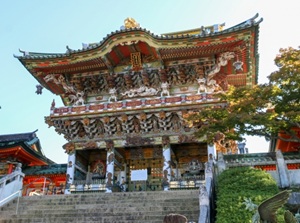
Koyomon gate like Nikko Toshogu
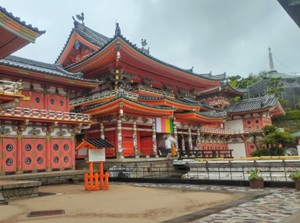
Main temple like Byodo-in in Uji city, Kyoto
Kosanji is a modern Buddhist temple founded by a priest changed from successful businessman for his mother in 1936.
It is in Ikuchi Island in Seto Inland Sea and is on the way of Shimanami-kaido expressway connecting Honshu and Shikoku islands.
All buildings in the temple are modeled after the famous historic structures in Japan.
But, it is not a theme park but a real Buddhist temple.
Many buildings are designated as registered tangible cultural properties.
Rurikoji (瑠璃光寺, Yamaguchi Pref.)
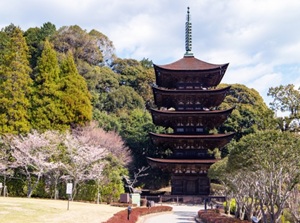
Rurikoji is a Buddhist temple in Yamaguchi city.
Yamaguchi city is called as "Western Kyoto", and Rurikoji is the symbol of Yamaguchi city.
It was founded in the end of the 14th century.
The five-story pagoda was built in 1442, and it is said that the building is one of the best five-story pagodas in Japan.
It is designated as a national treasure.
Shikoku 88 temples pilgrimage
Kuukai (774-835) who constructed Koyasan was born in Kagawa Prefecture in Shikoku island.
When he was 19 years old, he became a priest and practiced asceticism in many temples in Shikoku.
The 88 temples are associated with Kuukai.
The pilgrimage to the temples had done by the training priest since around the 14th century.
It is said that the common people began to make a pilgrimage in the late 19th century.
Many pilgrims from all over the country visit Shikoku throughout the year.
Each temple has a number, so visiting in that order is the normal pilgrimage.
The length of the pilgrimage route is about 1,400 km.
If you walk on all route, it takes 5 to 8 weeks.
The details are in the next pages.
The followings are popular temples.
Ryozanji (#1, 霊山寺, Tokushima Pref.)
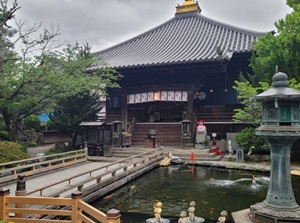
Ryozanji is the first temple of the pilgrimage.
It is located in Naruto city in Tokushima Prefecture, and is in the eastern part of Shikoku.
It was founded in the 730s or 740s, and Kuukai visited this temple in 815.
Because this temple is the starting place, the pilgrims can buy the goods for pilgrimage.
Chikurinji (#31, 竹林寺, Kochi Pref.)
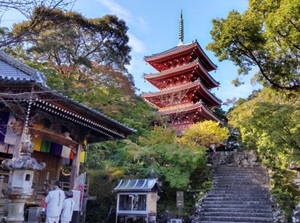
Chikurinji is the 31st temple of the pilgrimage.
It is located on the top of Mount Godai in Kochi city.
It was founded in 724, and Kuukai stayed in this temple in the 800s.
Mt. Godai is 146 meters above sea level, and is near Kochi Port.
There is a park around the temple.
Ishiteji (#51, 石手寺, Ehime Pref.)

Ishiteji is the 51st temple of the pilgrimage.
It is located near Dogo Onsen resort in Matsuyama city.
It was founded in 729, and Kuukai visited this temple in 813.
The main gate is designated as a national tresure, and main temple and many other buildings are important cultural properties.
The approach is in a corridor of the temple.
Zentsuji (#75, 善通寺, Kagawa Pref.)
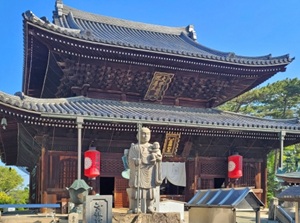
Zentsuji is the 75th temple of the pilgrimage.
It is located in Zentsuji city in Kagawa Prefecture. (The name of the city is also from the temple.)
Kuukai was born around the place of this temple in 774.
He studied Buddhism in Tang (current China) from 804 to 806.
Soon after returning home, he built this Zentsuji temple near his birthplace in 807.
There are many buildings, but most of them had been rebuilt after the 18th century.
Popular temples in Kyushu Region
Kanzeonji (観世音寺, Fukuoka Pref.)
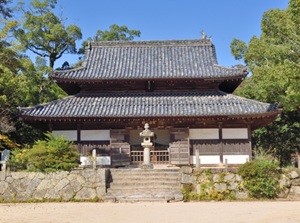
Kanzeonji is a Buddhist temple near Dazaifu-tenmangu shrine in Dazaifu city.
It was built in 746.
By 1630, all original buildings were destroyed by fire or storm.
Current buildings were rebuilt after that.
But the temple bell is the oldest one in Japan, and is designated as a national treasure.
Rakanji (羅漢寺, Oita Pref.)
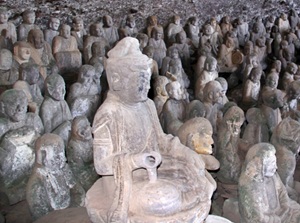
Guide to Gohyaku-rakan in Rakanji
Rakanji is located by the steep cliff in Yabakei gorge in Nakatsu city.
According to legend, it was founded by Indian priest in 645.
There are 451 stone Buddha statues in the cave of the cliff, and is called "Gohyaku-rakan".
They were enshrined by in the 1330s.
And, there are also thousands of stone Buddha statues in the cave and these are attractive.
Usuki Stone Buddhas (臼杵石仏, Oita Pref.)
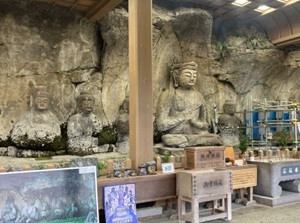
Usuki Stone Buddhas are in Usuki city.
They are the Japan's greatest Stone Buddhas created from the 10th to the 14th centuries.
61 stone Buddha statues are along the rocky cliff in a valley.
These are designated as national treasures.
It is a sacred place and Buddhist ceremonies are held several times a year.