
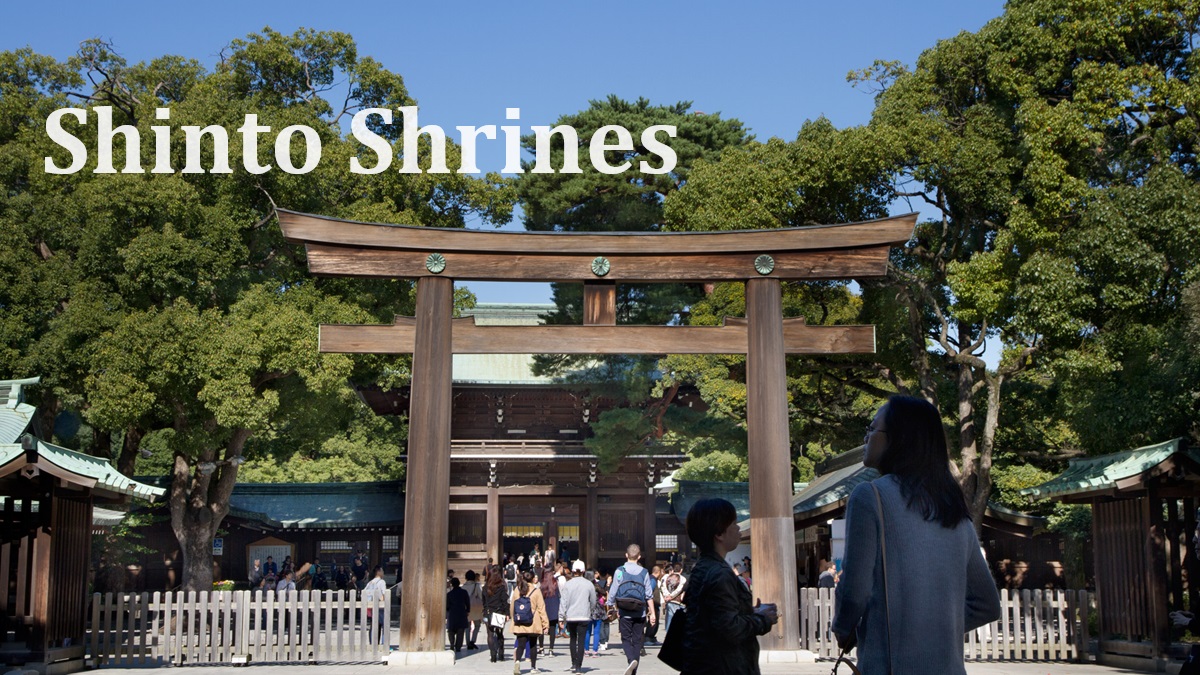
Shinto shrine in Japan


About Shinto shrine
Itsukushima Shrine in Hiroshima Pref.
Fushimi-Inari Taisha in Kyoto
Shinto shrine is called "Jinja" in Japanese.
Large or prestigious shrines are called "xx-jingu" or "xx-taisha".
Shinto is the native religion of Japan since ancient times.
There is no doctrine and scripture, but the moral sense and social customs of Japanese people are deeply rooted in Shinto naturally.
Many gods dwell in the nature and around us and they are always watching us.
And, the soul of a dead person becomes a god, and it lives in the house as the guardian deity.
That is the idea of Shinto, so there are uncountable gods in Japan.
There are more than 80,000 Shinto shrines in Japan, so we can find them in any city, town or village.
Japanese people visit Shinto shrine to pray to the god.
Torii gate in Meiji Shrine in Tokyo
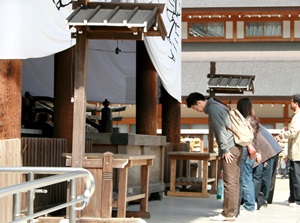
Worshippers in Yasukni Shrine in Tokyo
Shinto shrine is not a sightseeing facility.
It is the sacred place to pray for Japanese people, so you are required to act with moderation and good manner in the site.
At the entrance of Shinto shrine, "Torii" gate stands.
Two crosspieces are set on top of two upright pillars, so you can find the shrine easily.
Worshippers step forward to the front of the worship hall.
The manner of worshipping is "Twice bowing, twice clapping and one-time bowing".
It is only for a few seconds.
After worshipping, worshipper can buy the lucky charm and draw "Omikuji" (a fortune-telling slip).
Shinto shrine is open to the public.
But, several sacred areas in major shrines are prohibited to enter.
And, it is prohibited to take a picture of inside of the worship hall.
You must observe the rule.
It is said that the imperial family is the descendant of gods who created Japan in the mythical age.
Therefore, Japanese Emperor System is closely related to Shinto.
Both Shinto and Buddhism have been believed by Japanese people, and they are not conflicting religions.
Ise Shrine (Ise-jingu)
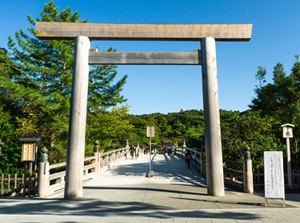
Ujibashi bridge, the entrance to Naiku of Ise-jingu
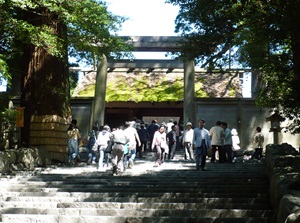
Main Shrine of Naiku of Ise-jingu
Ise-jingu (伊勢神宮) is the highest and special rank of all Shinto shrines in Japan.
It is in Ise city in Mie Prefecture.
It is unknown when the shrine was founded.
There are various theories of the foundation year from 4 BC to the 7th century AD.
Ise Shrine enshrines the gods who created Japan in the Japanese mythology.
It is said that they are the ancestors of current Japanese Imperial Family.
So, the Emperor and the Imperial family visit to worship sometimes.
And, it is the annual event that the Prime Minister of Japan visit Ise Shrine on the first day after the New Year Days.
The shrine is called "spiritual home of Japanese people".
So, it has been said traditionally that Japanese people should go to Ise-jingu at least once in the lifetime.
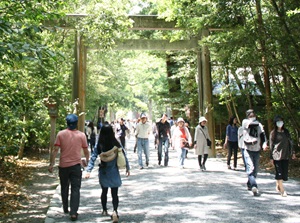
Approach to Geku
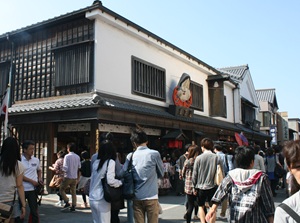
Oharai-machi street out of Naiku
Ise-jingu has two sites of the shrine.
Geku (外宮, Outer shrine) is in the center of Ise city, and Naiku (内宮, Inner shrine) is by a sacred river and a vast forest in the suburbs of the city.
The sites of both shrines are the widest in Japan.
In Naiku, worshippers walk about 800 meters from the entrance to the main shrine.
Worshippers should visit both shrines formally.
It is customary to visit Geku first then visit Naiku.
But visiting only Naiku is also OK.
There is a street of souvenir shops named "Oharai-machi" near the entrance of Naiku, and it is always full with the people after worshipping.
Famous Shinto Shrines in each region
Popular Shinto shrines in Hokkaido Region
Hokkaido-jingu (北海道神宮, Sapporo city)
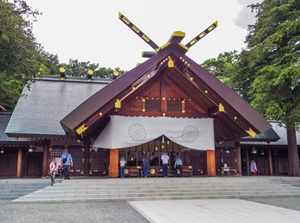
Hokkaido-jingu is in the western part of central Sapporo city.
The shrine was built in 1871.
At that time, Russia was advancing to the northeast of Hokkaido through Sakhalin and Kurile Islands.
So, the shrine was built as the guardian to defend against Russia.
Popular Shinto shrines in Tohoku Region
Takayama Inari-jinja (高山稲荷神社, Aomori Pref.)
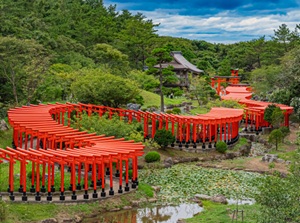
Takayama Inari-jinja is a shrine located on the western coast of Tsugaru Peninsula.
It is thought that the shrine was founded around the 15th centuries.
The shrine is on a low hill near the Sea of Japan.
There is a unique and attractive path with many Torii gates in this shrine.
Morioka Hachimangu (盛岡八幡宮, Iwate Pref.)
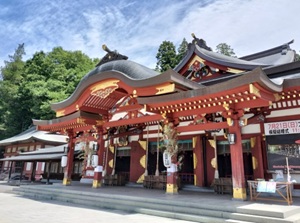
Morioka Hachimangu is a Shinto shrine in Morioka city.
It was established in 1062, and several other shrines gathered around the main shrine.
It is the guardian deity of Morioka city.
"Chagu-chagu Umako" festival in June is held around this shrine.
Osaki-Hachimangu (大崎八幡宮, Miyagi Pref.)
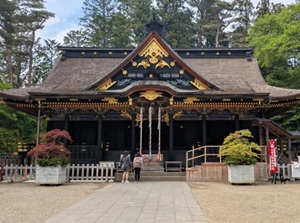
Osaki-Hachimangu is located in the western part of central Sendai city.
The oroginal shrine was established in the northern part of Miyagi Prefecture around the 9th century, and it was moved to current place in 1607.
The main shrine is very gorgeous and is designated as a national treasure.
Popular Shinto shrines in Kanto Region
Meiji-jingu (明治神宮, Tokyo)
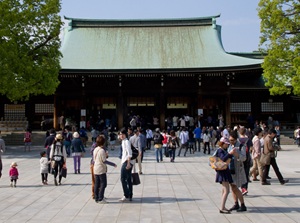
Meiji-jingu is located near Shinjuku and Harajuku districts in the center of Tokyo.
It was built for Emperor and Empress Meiji in 1920.
After Emperor Meiji died in 1912 and Empress Meiji died in 1914, the construction of this shrine was planned.
The shrine was built in 1920 and they were enshrined.
The site is very wide.
Most parts of the shrine are covered with forests, so this is a natural area in big city.
It is one of popular visiting spots in Tokyo, so many foreign tourists also visit here.
Yasukuni-jinja (靖国神社, Tokyo)
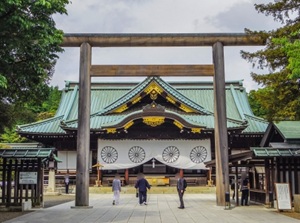
Yasukuni-jinja is located to the north of Kokyo (Imparial Palace) in the center of Tokyo.
It was founded by Emperor Meiji in 1869.
It has enshrined the spirits of over 2.4 million soldiers killed in the war after the 19th century.
Especially, over 2.1 million soldiers were dead in the World War II.
Tsurugaoka Hachimangu (鶴岡八幡宮, Kanagawa Pref.)
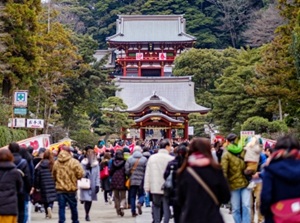
Tsurugaoka Hachimangu is the central shrine of Kamakura city in Kanagawa Prefecture.
It was founded in 1063.
Kamakura became the center of the capital city of politics from 1185 to 1333.
This shrine was build as the guardian deity of the capital.
And the long approach through the city is unique.
Nikko Toshogu (日光東照宮, Tochigi Pref.)
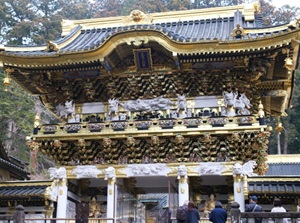
Nikko Toshogu is the central shrine in the sacred area of Nikko.
The shrine was completed in 1636.
Tokugawa Ieyasu, the first samurai Shogun and the founder of Edo Government, is enshrined as "god".
The main gate "Yomeimon" and many buildings are very gorgeous and have a lot of famous carvings.
It is designated as World Heritage Site .
Futarasan-jinja (二荒山神社, Tochigi Pref.)
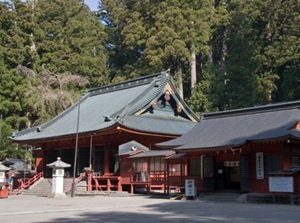
Futarasan-jinja is located next to Nikko Toshogu.
It is said that this shrine was founded in 767 and three mountain around Nikko are enshrines.
The shrine had been the central shrine in Nikko until the construction of Nikko Toshogu.
Shogun family had provided generous support to this shrine as the original shrine in Nikko.
Oarai Isosaki Jinja (大洗磯前神社, Ibaraki Pref.)
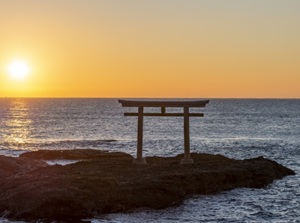
Oarai Isosaki Jinja is a shrine by the shore in Ibaraki Prefecture facing the Pacific Ocean.
It is said that Oarai Isosaki Shrine was founded in 856.
According to legend, a god descended here at the end of the year, so the shrine was built.
Main shrine is on the hill, but the approach leads to the sea.
It is said that the torii gate on the sea is the place where the god descended.
Popular Shinto shrines in Koshin-etsu Region
Arakura Fuji-Sengen-jinja (新倉富士浅間神社, Yamanashi Pref.)
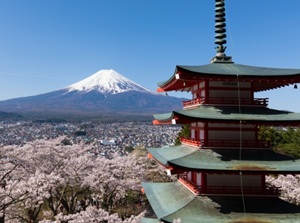
Arakura Fuji-Sengen-jinja is located near Lake Kawaguchi at the foot of Mt.Fuji.
It was founded in 705.
The surrounding mountain "Arakurayama" is the sacred site of the shrine, and the area is called Arakurayama Sengen Park.
In the site, there is a five-story pagoda and it is a cenotaph monument built in 1958.
There is a hill behind the shrine, and the scenic view of the pagoda, cherry blossoms and Mt.Fuji is very popular.
Suwa-Taisha (諏訪大社, Nagano Pref.)
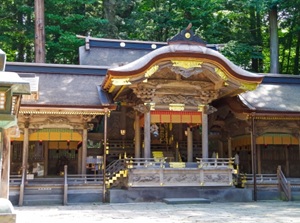
Suwa-Taisha is near Lake Suwa in Nagano Prefecture and is the central shrine in this area.
The shrine is unknown when it was founded, but it is said that it had been in the 8th century.
Two shrines are on the northern side and two shrines are on the southern side.
Onbashira Festival held every 6 years is very famous.
Popular Shinto shrines in Hokuriku Region
Oyama-jinja (尾山神社, Ishikawa Pref.)
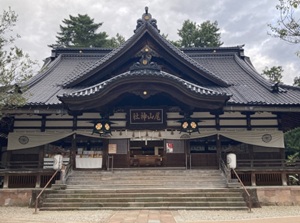
Oyama-jinja is located by Kanazawa Castle in Kanazawa city in Ishikawa Prefecture.
The shrine enshrines Maeda Toshiie who was the good lord of Kanazawa and was built in the 1870s.
The gate is unique and is mixed with Western-style and Chinese-style.
Shirayama-hime Jinja (白山比咩神社, Ishikawa Pref.)
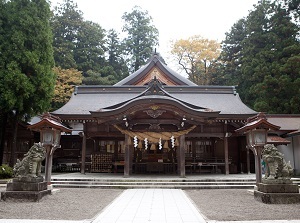
Photo by Ishikawa Prefectural Tourism League
Shirayama-hime Jinja is at the northern foot of sacred Mt.Hakusan and is to the south of Kanazawa city.
In Japanese myth, the shrine was founded in the 1st century B.C. and a goddess was enshrined.
The main shrine was rebuilt in 1770.
In Japanese myth, the goddess connected an estranged couple gods and their babies created Japan.
So, if you visit and worship this shrine, you may be able to succeed in love.
Heisenji Hakusan-jinja (平泉寺白山神社, Fukui Pref.)
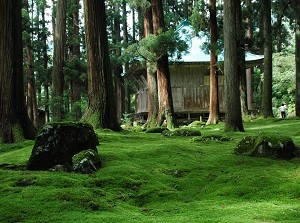
Photo by Hakusan Heisenji
Heisenji Hakusan-jinja is at the southwestern foot of Mt.Hakusan and is in the mountain in Fukui Prefecture.
The was founded in 717, and a Buddhist temple was added in the 10th century.
In the 14th century, this temple began to participate in civil war and a fortress was built around the temple and 8,000 priests lived in this area as soldier with weapon.
After the end of samurai period, the temple was abondoned in 1872 and original Hakusan Shrine remained.
The precinct is covered with beautiful moss and very old buildings remain.
Popular Shinto shrines in Tokai Region
Mishima-taisha (三嶋大社, Shizuoka Pref.)
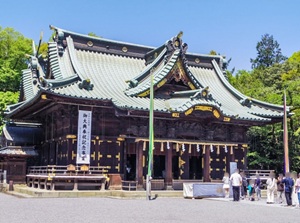
Mishima-taisha is in Mishima city near Hakone and Mt.Fuji.
It is unknown when this shrine was founded, but it was an important shrine in this area in the ancient times.
The buildings were rebuilt in the 19th century and are big and stately.
In this precincts, there is the old tree of kinmokusei (fragrant orange-colored olive). and it is designated as a national natural treasure.
Atsuta-jingu (熱田神宮, Aichi Pref.)
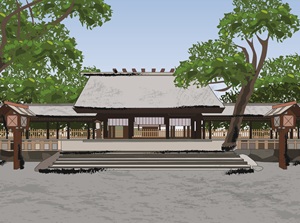
Image of Atsuta-jingu
Atsuta-jingu is in Nagoya city, and it was founded in the mythical age.
The site is wide and the size of the area is about 700 meters north to south, and about 300 meters east to west.
Most parts of the site are covered with forest.
In the myth, there were three sacred treasures of gods in Ise Shrine, and one of them (a sacred sword "Kusanagi-no-Tsurugi") was carried by a god to this shrine.
This shrine enshrines the sword as the object of worship.
Therefore, the rank as Shinto shrine is very high, and it is related to Imperial Family.
The Emperor and Empress visit here sometimes.
The sword can't be seen even by the Emperor and is enshrined somewhere in the shrine securely.
Instead, there are the museums housing various swords and treasures donated to the shrine.
In Atsuta Shrine, you can't take pictures in the shrine without permission.
Meoto-iwa (夫婦岩, Mie Pref.)
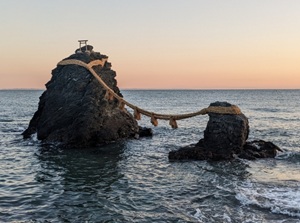
Meoto-iwa is a pair of rocks near a coast, and it is close to Ise Shrine.
The name means "rocks of husband and wife".
The two rocks are connected with the sacred ropes.
There is Futami-Okitama-jinja (二見興玉神社, Mie Pref.) on the shore. Meoto-iwa is enshrined by the shrine.
Popular Shinto shrines in Kansai Region
Nara and Kyoto were the ancient capital cities.
So, there are many important Shinto shrines in Kansai Region.
Kasuga Taisha (春日大社, Nara city)
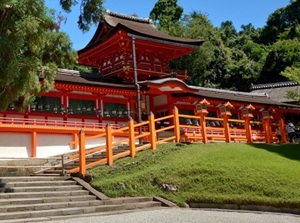
Kasuga Taisha is in Nara city and is designated as a World Heritage Site.
It was founded in 768 when Nara was the capital of Japan (710-794).
The shrine was the guardian god of Nara and enshrined two powerful clans.
Many buildings had been rebuilt in a later age, and the four main shrines are designated as national treasures.
By the way, the deer in Nara are the messengers of the God in Kasuga Taisha.
Tanzan-jinja (談山神社, Nara Pref.)
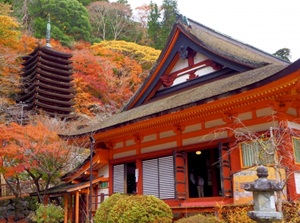
Tanzan-jinja is a Shinto shrine in the deep mountain in Nara Prefecture.
Before the first big capital city was established in Nara in 710, this shrine was founded in 678.
It was originally a Buddhist temple and it became the Shinto shrine in 1869.
So the buildings are like Buddhist temple.
The thirteen-storied Pagoda is attractive.
Kitano Tenmangu (北野天満宮, Kyoto city)
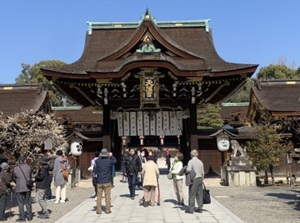
Kitano Tenmangu is located in the northwestern part of central Kyoto.
In 947, the shrine was built for an excellent politician and a poet who had been fallen for the trick by his political enemy.
He was a genius, so he has been worshiped as the god of academic achievements. So, a lot of students taking an entrance exam visit here.
Yasaka-jinja (八坂神社, Kyoto city)
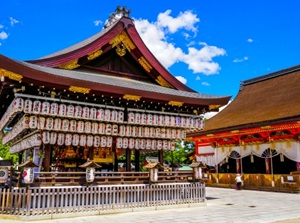
Yasaka-jinja is located by Gion district in Kyoto city.
It was founded in 656 and is the guardian deity of Gion.
The vermilion-lacquered main gate is attractive.
The main building is unique because the main shrine and the worship hall is in the building.
Gion Festival in summer is the annual festival of this shrine.
Heian-jingu (平安神宮, Kyoto city)
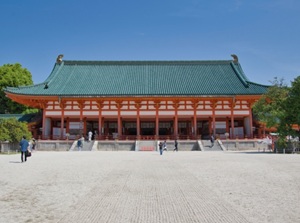
Heian-jingu is located in the northeastern part of central Kyoto.
It was built as the main construction to commemorate the 1,100th anniversary of the ancient capital city of Kyoto in 1895.
But, it was burned down in an arson attack in 1976, and was rebuilt in 1979.
Some buildings are connected with the corridors and there are a few ponds behind the buildings.
Fushimi Inari Taisha (伏見稲荷大社, Kyoto city)
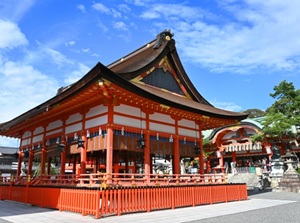
Fushimi Inari Taisha
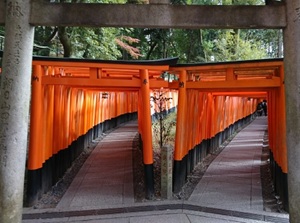
Senbon-Torii in Fushimi Inari Taisha
Fushimi Inari Taisha is located in the southen part of Kyoto.
The shrine was founded in 711.
"Inari" enshrines the god of agriculture, and fox has been the messenger of Inari God.
There are many Inari shrines across Japan, and Fushimi Inari Taisha is the grand head shrine.
The site is wide and Mount Inari is the main.
There are the main shrine and the other buildings atound the foot of the mountain.
"Senbon-Torii" are the tunnels of many red Torii gates and are popular for the visitors.
From several hundred years, many worshppers have donated them and the tunnels have been created.
Because of ignorance about Japanese religion, the foreign tourists creating a nuisance in this shrine are increasing.
We hope to visit with good manner.
Sumiyoshi Taisha (住吉大社, Osaka city)
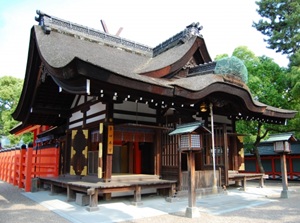
Sumiyoshi Taisha is located in the south part of central Osaka.
It was also founded in the mythical age.
It is the guardian deity of sea of Osaka.
There is a unique bridge with a shape of semicircle at the entrance.
And there are four main shrines.
Kumano Kodo (熊野古道, Wakayama Pref.)
Kumano Kodo is the collective name of the ancient pilgrimage routes leading to Three Grand Shrines of Kumano (Wakayama Pref.) and is designated as World Heritage Site.
The shrines are in the southern edge of Kii Peninsula with steep and deep mountains.
In ancient times, the sacred areas were very far away from the main cities of Kyoto and Osaka.
The routes passes in the steep mountains, along the shores, and through the villages and towns living in the people.
It is hard for travellers to walk the routes perfectly.
But, you can visit the shrines which are the final destinations.
The three shrines are Kumano Hongu Taisha (熊野本宮大社), Kumano Nachi Taisha (熊野那智大社) and Kumano Hayatama Taisha (熊野速玉大社).
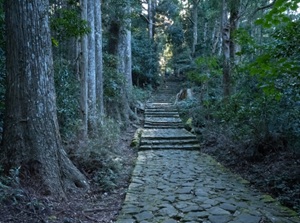
A route of Kumano Kodo around Nachi
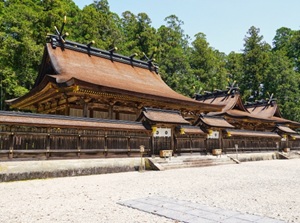
Kumano Hongu Taisha
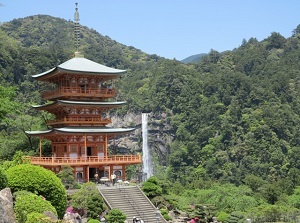
Nachi falls near Kumano Nachi Taisha
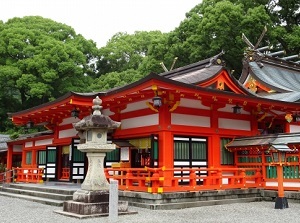
Kumano Hayatama Taisha
Popular Shinto shrines in Chugoku Region
Izumo Taisha (出雲大社, Shimane Pref.)
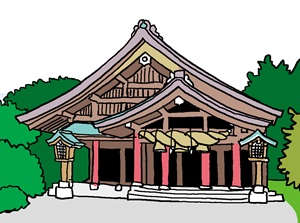
Image of Izumo Taisha
Izumo Taisha is in Izumo city in Shimane Prefecture.
The rank as Shinto shrine is very high.
It was founded in the oldest age along with Ise Shrine.
In Japanese myth, a god on the earth create a good land in this area.
The goddess on the heaven saw the great achievement, so she built this shrine for him.
And the place that the goddess is enshrined is Ise-jingu shrine.
There is the main shrine (Honden) and Haiden to worship is in front of Honden.
And, a huge sacred straw rope is hung at the entrance of Kaguraden hall, and it is the largest one in Japan.
In addition, Izumo Taisha is the most well-known shrine as the god of the marriage.
In Izumo Taisha, you can't take pictures in the shrine without permission.
Itsukushima-jinja (厳島神社, Hiroshima Pref.)
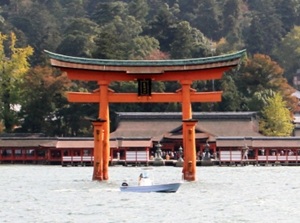
Itsukushima-jinja is a shrine on the sea.
It is located in Miyajima island (宮島) located about 20 km southwest of Hiroshima city.
The whole island is the site of the shrine.
It is said that the original shrine was built in the island in 593, and the current unique and gorgeous shrine was built in 1168.
The shrine is on the shore and the seawater comes under the shrine at high tide.
The big torii gate stands in the sea in front of the main shrine.
The shrine is a national treasure and it is designated as World Heritage Site.
Motonosumi Shrine (元乃隅神社, Yamaguchi Pref.)
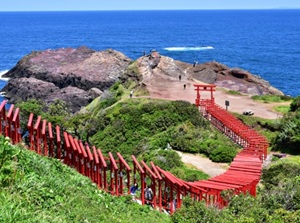
Motonosumi Shrine is a small shrine by the Sea of Japan.
It is located on the cliff in Nagato city in Yamaguchi Prefecture.
The shrine is built by a fisherman's boss in this area in 1955, so it has no connection with the other Shinto shrines.
There is a path from the shrine to the top of rocky cliff, and a lot of red torii gates make a tunnel.
CNN, an American news media, introduced the scenery of this shrine in 2015, so it became popular.
Popular Shinto shrines in Shikoku Region
Kotohira-gu (金刀比羅宮, Kagawa Pref.)
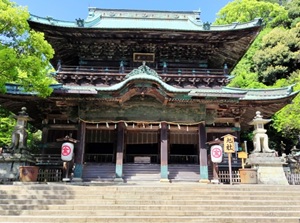
Kotohira-gu is a Shinto shrine in Kotohira town in Kagawa Prefecture.
The shrine is on the mountainside of Mt. Kotohira (another name: Mt. Konpira).
So, it is affectionately called Konpira-san.
Originally, a god of both Buddhism and Shinto had been enshrined, but it became the shrine enshrining only the god of Shinto in 1868.
Since ancient times, the believers have visit here from all over the country.
The long stone steps to the shrine are famous.
Oasahiko-jinja (大麻比古神社, Tokushima Pref.)
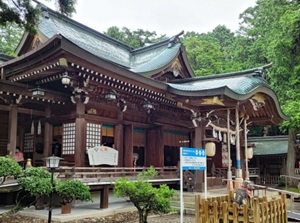
Oasahiko-jinja is located about 15 km north of Tokushima city.
It is said that this shrine had existed in the middle of the 9th century.
It enshrines a guardian god of Tokushima, so it is the main shrin in this area.
There is a big Torii gate and a big camphor tree over 1,000 years old in the center of the precinct.
In addition, there is an old stone bridge constructed in 1919.
From 1917 to 1920, there was a prison camp of German soldiers in World War I near the shrine.
Because the Japanese staff of the camp was friendly to the prisoners, the prisoners constructed the bridge as a memory before returning home.
Popular Shinto shrines in Kyushu Region
Dazaifu Tenmangu (太宰府天満宮, Fukuoka Pref.)
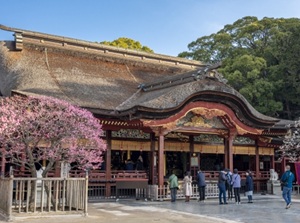
Dazaifu Tenmangu is a Shinto shrine and is in Dazaifu city located about 15 km southeast of Fukuoka city.
It was built for Sugawara Michizane in 913.
He was an excellent politician and a poet who had been demoted from Kyoto and died in this town.
There is a legend that an ume (Japanese apricot) tree which had been loved by him came flying from Kyoto in one night.
Therefore, the ume tree in the shrine is famous.
Yutoku Inari Jinja (祐徳稲荷神社, Saga Pref.)
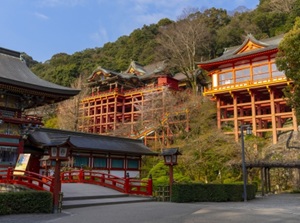
Yutoku Inari Jinja is a Shinto shrine in Kashima city in the south part of Saga Prefecture.
The shrine was founded in 1687.
It is one of the largest Inari Shrines along with Fushimi Inari Taisha in Kyoto.
The main shrine is set up on the slope of a mountain, and is supported by exposed red poles.
It is located 18 meters above the ground, and it is similar to popular Kiyomizu-dera temple in Kyoto.
Amanoiwato-jinja (天岩戸神社, Miyazaki Pref.)
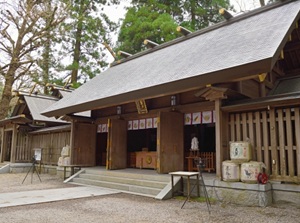
Amanoiwato-jinja is a Shinto shrine in the mountain in the north part of Miyazaki Prefecture.
It is in the village in Takachiho Gorge.
This area is the place where the sun goddess hid in the cave in the Japanese myth.
The cave is the sacred object, but only the approved worshippers can see the cave by the priest's guided tour.
Of course, it is prohibited to take photos around the cave.
Udo-jingu (鵜戸神宮, Miyazaki Pref.)
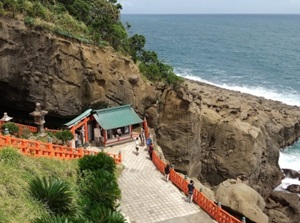
Udo-jingu is a Shinto shrine in Nichinan city in Miyazaki Prefecture.
It is located in the cave of the cliffside facing the Pacific Ocean.
The shrine was founded in the mythical age.
It is said that the cave was the place that a goddess gave birth.
So, the rocks in the cave are believed as the symbol of easy delivery and good childcare.
Kirishima-jingu (霧島神宮, Kagoshima Pref.)
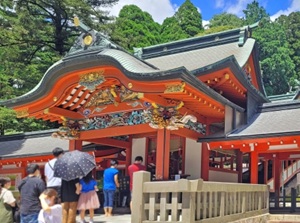
Kirishima-jingu is the largest Shinto shrine in the southern Kyushu Island.
It is located near active Mt. Kirishima volcano in Kagoshima Prefecture.
It is said that the shrine was founded in the 6th century.
The volcano is the object of worship of the shrine.
The main shrine is very colorful and gorgeous.
It was rebuilt in 1715 and was designated National Treasure.