
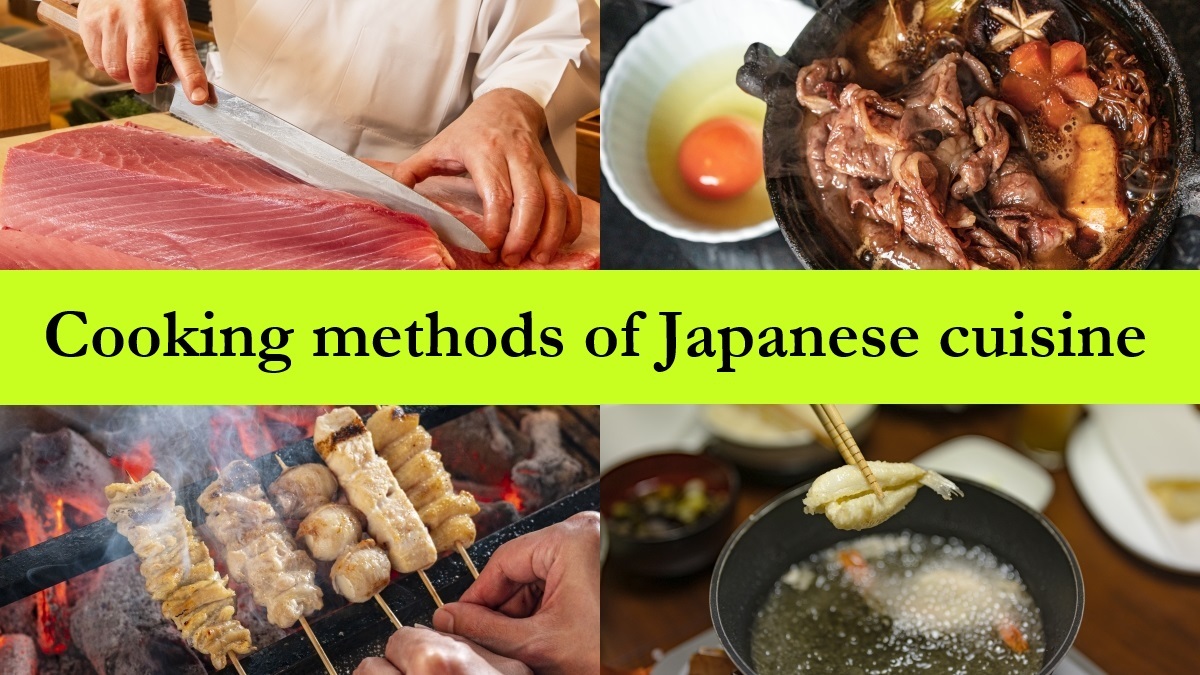
Cooking methods of Japanese cuisine
Raw food Boiling in water Boiling in dashi and shoyu Grilling over an open fire Steaming food Frying in deep oil
Raw food
If a raw food is edible, Japanese people like to eat it.
A long time ago, Japanese people invented soy sauce and discovered that eating raw fish dipped in it was delicious.
The Japanese developed techniques to preserve the freshness of fish which is a staple ingredient.
So, raw dishes have become the main focus of Japanese cuisine.
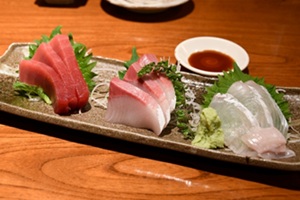
Sashimi
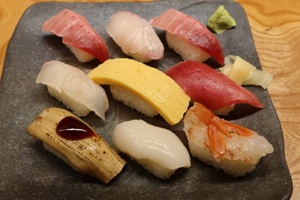
Sushi
Sashimi is the sliced raw fish.
Sliced fish is eaten with soy sauce and wasabi.
When you eat a Japanese meal as part of a course menu, sashimi is usually served first.
Sushi is a combination of sashimi and rice.
As a dish, it's simply cutting up fish.
However, selecting fresh fish, cutting it in a way that doesn't compromise its flavor, and arranging it beautifully are all part of a chef's skill.
This technique is not required in either Western or Chinese cuisine.
Besides fish, Japanese people commonly eat raw egg.
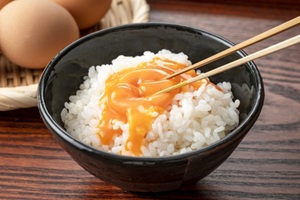
Tamago kake gohan
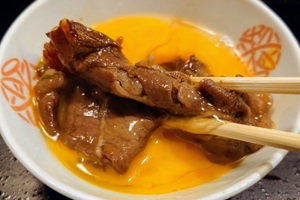
Dip the sukiyaki beef in raw egg
Drop a raw egg on top of the rice, add a little soy sauce, and mix.
If you crush the yolk with chopsticks and stir it in, it will turn into a risotto.
It is a homemade dish that makes plain rice taste delicious.
In Japanese, it is called "Tamago kake gohan" (rice with raw egg).
Sukiyaki is a well-known Japanese beef dish.
It's customary to eat that beef dipped in a raw egg sauce.
Most foreign tourists are surprised by the Japanese custom of eating raw eggs without hesitation.
Japanese eggs are distributed as a special food product that can be eaten raw under strict hygiene control.
Boiling in water
This is the simplest cooking method.
The most important staple "rice" is made by boiling uncooked rice until water evaporates.
Boiling Japanese noodles such as "udon" and "soba" is a preliminary cooking procedure.
There are some dishes by only boiling in water.
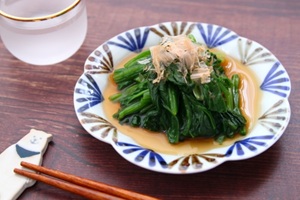
Ohitashi of spinach
Ohitashi is the dish of only boiled vegetable.
Usually, it is served after cooling.
It is eaten after pouring any sauce such as soy sauce.
Leafy vegetables such as spinach and komatsuna (Japanese mustard spinach) are often used.
It is often made as a side dish to bring out the flavor of vegetables.
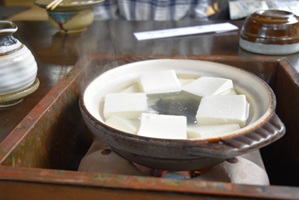
Yudofu in Kyoto
Yudofu is a simple pot dish.
Tofu is boiled in the water with a piece of dried konbu.
It is generally eaten with ponzu (citrus seasoned soy sauce).
Since Yudofu is a type of Buddhist vegetarian dish, foreign tourists can find the restaurants serving it in Kyoto and the temple town of major Buddhist temple.
Boiling in dashi and shoyu
This is one of popular cooking method, and it is called "simmered dish".
Some foods are boiled in the soup mixed dashi and shoyu.
And miso, mirin, sugar or sake are added depending on individual taste.
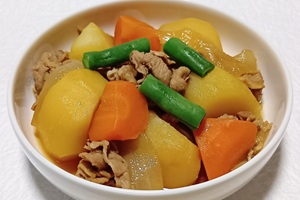
Simmered potatoes, carrots, onions, meat, etc.
Root vegetables such as radishes, carrots, lotus roots, and potatoes, fruits vegetables such as pumpkins and winter melons are used mainly.
In cooking, they can be boiled individually or in combination with several other types.
Sometimes, small pieces of meat are added.
Therefore, the variety of dishes is countless.
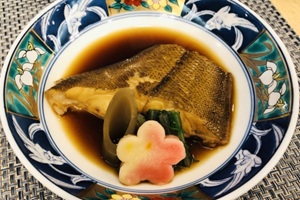
Simmered flatfish
Simmered fish also falls into this category.
Fillets or whole pieces of fish are simmered in the broth described above.
Sometimes miso is added to the broth.
White fish such as flounder, cod, and sea bream, oily fish such as mackerel and sardines are suitable for this cooking.
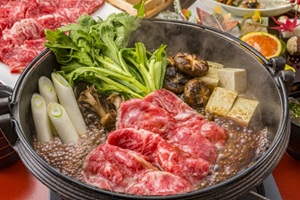
Sukiyaki
Sukiyaki is one of the Japanese dishes that is well known to foreigners.
Put thinly sliced high-quality beef, various vegetables, and tofu into a pot.
Then, add soy sauce and sugar to the broth and simmer until it becomes sweet and savory.
Close group gathers around a pot, each adding their own ingredients, and then everyone takes out what's cooked and eats it.
As mentioned above, it is common to eat it dipped in raw egg.
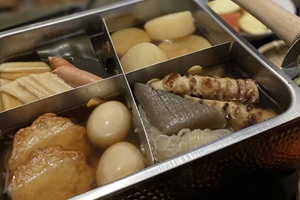
Oden
Oden is a dish where various kinds of fish paste products, daikon radish, boiled eggs, and other ingredients are simmered in a broth in a large pot.
They are made in large quantities, and customers can choose and eat several of their favorites.
Oden is on the menu at izakayas (Japanese pubs).
During the colder months, it is sold at convenience stores and can be taken home.
Grilling over an open fire
This is also one of popular cooking methods.
Fish or meat are grilled over charcoal fire.
In the mountain, there is a method that skewered fish is stuck in a fireplace and is grilled by the fire.
The cooking method is the same as barbecuing.
But, the dedicated cooking area is set up indoors, such as in the kitchen.
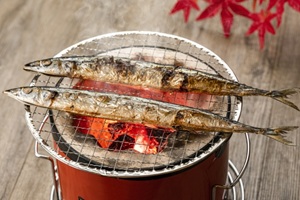
Shioyaki of saury
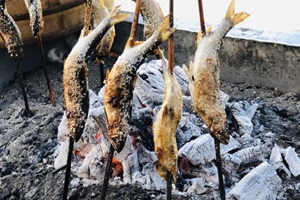
Shioyaki of sweetfish
The simplest way to cook it is to sprinkle salt on the fish and grill it over a fire.
It is called "Shioyaki" in Japanese.
Any type of fish can be grilled using "Shioyaki" method.
Salt-grilled saury, which is caught in the autumn, is a favorite food of the Japanese people.
In mountainous areas, small river fish such as sweetfish are grilled by skewering them and standing them upright by a fire.
There is a certain rustic charm to biting into a fish while still holding the skewer.
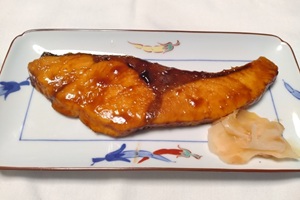
Teriyaki of yellowtail
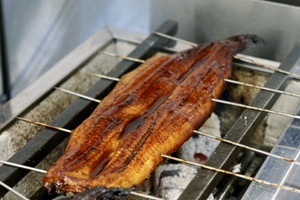
Kabayaki of eel
There is a cooking method called "Teriyaki".
Teriyaki is a dish where fish fillets or meat are coated in a sweet and savory sauce made with soy sauce and mirin, and then grilled over a fire.
In particular, when it comes to long, slender fish such as eels and conger eels, it is called "Kabayaki."
The process involves opening the fish, removing the bones, and shaping it into a wide form.
Eel grilled using "Kabayaki" is one of the most representative dishes.
There are many restaurants specializing in traditional eel dishes.
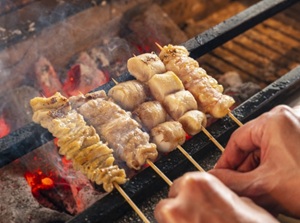
Grilling yakitori
Yakitori is the most popular menu item at izakayas (Japanese pubs).
It is made by skewering small pieces of chicken and grilling them over a fire.
You can choose between Shioyaki-style or Teriyaki-style for the flavor.
The most delicious way to eat it is to bite into the chicken directly from the skewer without removing it.
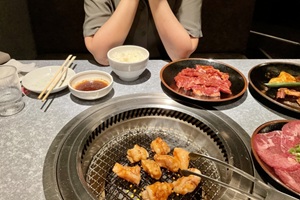
Yakiniku restaurant
Yakiniku is a dish where customers grill sliced meat and vegetables themselves on a roaster set up on their table.
It's essentially an indoor barbecue, where the restaurant prepares delicious ingredients for the customers.
It is originally a Korean dish.
Japanese yakiniku restaurants install smokeless roasters, and mainly serve beef as our main ingredient.
Steaming food
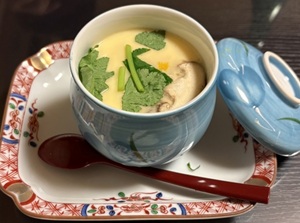
Chawanmushi
Steamed food dishes are also important cooking method.
For this cooking, special steam pots or steaming baskets made from bamboo are used.
Various foods can be cooked by steaming.
Chawan-mushi is one of the representative dishes.
"Chawan" means a bowl and "mushi" means "steaming".
Mix the egg into the broth and pour it into a bowl.
Place some ingredients inside and steam.
This will result in a dish similar to custard pudding.
It's a dish that always appears in Japanese course meals.
This is a dish that is rarely eaten with a spoon in Japanese cuisine.
Frying in deep oil
Original Japanese cooking use no oil.
But the method using oil was introduced from foreign countries.
Tenpura
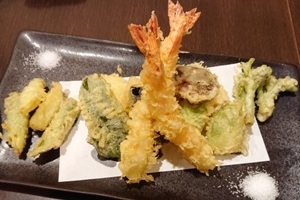
Tenpura
Tenpura is famous as Japanese fry cooking.
It is said that Europian missionaries introduced it with Christianity in the 16th century.
Seafood and vegetables are coated in a thin batter and deep fried.
Japanese tenpura batter is characterized by its light and crispy texture.
Tonkatsu
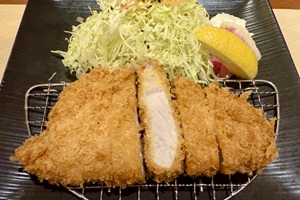
Tonkatsu
In the late 19th century, "cutlet" was introduced from Europe.
In 1899, a Japanese restaurant invented Tonkatsu like cutlet of pork.
Thick sliced pork is coated with bread crumbs and deep fried.
Tonkatsu is coated with coarse fresh breadcrumbs, which gives it its unique light texture.
Customers can choose between "Rōsu-katsu" made with pork loin, or "Hire-katsu" made with pork fillet.
It is generally eaten with Worcestershire sauce.
Furai
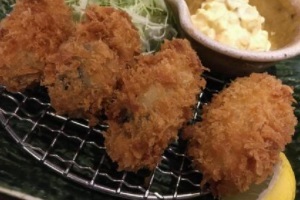
Kaki-furai (Fried oysters)
The cooking method used for tonkatsu is also used for seafood.
The dish is called Furai which is the Japanese pronunciation of the English word "fry".
The most commonly used ingredients are horse mackerel, prawn, oysters, and squid.
As for the sauce, Worcestershire sauce is used just like with tonkatsu, but tartar sauce and Japanese soy sauce are also commonly used.
Karaage
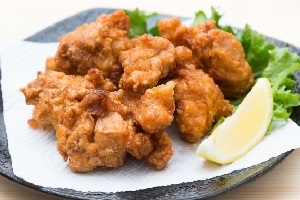
Karaage of chicken
Karaage is made by lightly coating ingredients with flour and deep-frying them in hot oil.
Chicken of Karaage is similar to Kentucky Fried Chicken.
But, popular "Kentucky Fried Chicken" gets its flavor from the spices in its batter
But karaage is seasoned with soy sauce and other flavorings in the meat before frying.
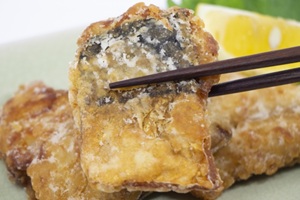
Tatsuta-age of a fish
Wheat flour is used as the powder.
But, when potato starch is used, it becomes a unique Japanese fried dish called Tatsuta-age.
Compared to Karaage, tatsuta-age is characterized by a crispy texture, with the potato starch remaining as a patchy white coating on the surface of the ingredients.
Tatsuta-age can be applied not only to chicken but also to fish such as mackerel.