
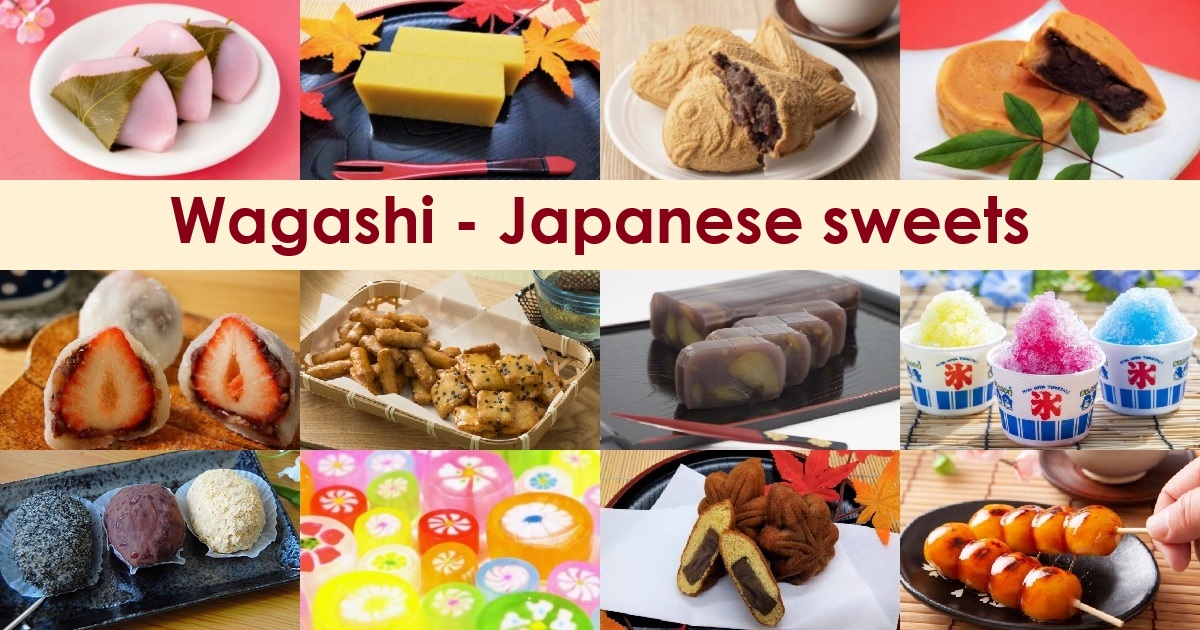
Wagashi - Japanese sweets
About Wagashi
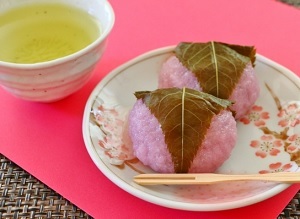
Sakura-mochi sold in spring
Many Wagashi are sweet, because they are eaten with green tea which is refreshing and slightly bitter.
And they are mainly made from only a few ingredients.
They are rice, wheat flour, azuki (small red bean) and sugar.
Especially, "an" made from beans is commonly used for many Wagashi.
(Sometimes, it is also called "anko".)
"An" is the paste made by boiling beans with sugar.
So, it is very sweet.
"An" is used like cream or jam in Western confections.
It is used as the filling or coating of Wagashi.
"An" made from adzuki bean (small red bean) is often used.
There are two types of adzuki an.
One is "tsubu-an" made with seed coat, and another is "koshi-an" made without seed coat.
Both are used, and the color is close to deep purple and brown.
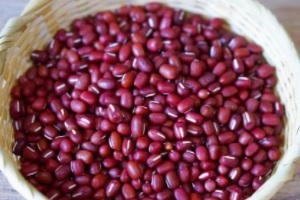
Adzuki beans to make 'an'
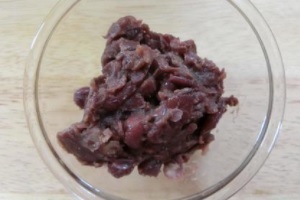
Tsubu-an
In addition, there is "an" mixed "koshi-an" with sweetly boiled large adzuki beans.
It is called "ogura-an", and the shape of adzuki beans is seen.
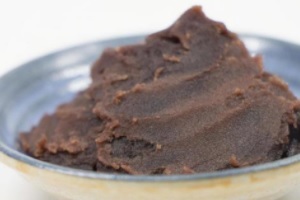
Koshi-an
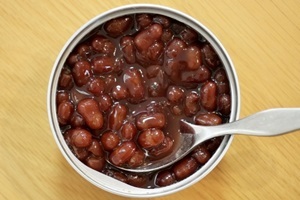
Ogura-an
As the other "An", there are "shiro-an" (White an) made from white common beans and "uguisu-an" (Green an) made from green peas.
As above, Wagashi use sugar, but doesn't use fat such as butter and cream.
Therefore, most Wagashi have lower calories than Western confections.
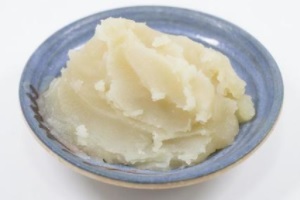
Shiro-an
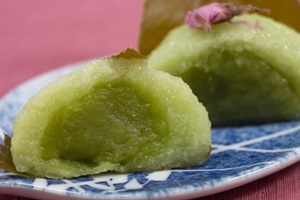
Uguisu-an filled in Wagashi
Wagashi using "an" Wagashi made at street stalls Wagashi like cookie or cracker Japanese Candy Dango (Dumplings) Seasonal confectionery Confectionery served at cafe
Main type of Wagashi using "an"
Manju
Manju is most common type of Wagashi.
"U" in the word is pronounced long, so it is read as "manjū".
Manju is made by wrapping "an" with a skin made of any flour and steaming it.
As the variety of the skin, brown sugar, miso, powder of green tea, etc. is mixed in it.
You can find them at souvenir shops in Japan.
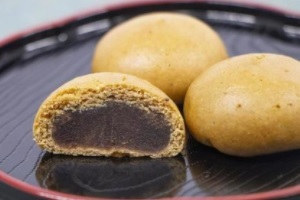
Manju
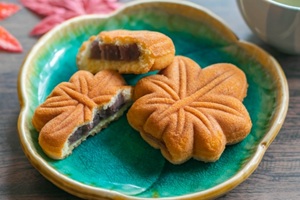
Momiji-manju in Hiroshima
Daifuku
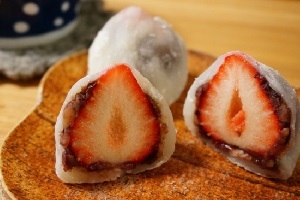
Ichigo-Daifuku
Daifuku is also a Wagashi like manju.
But, the outside is made of mochi and "an" is filled.
Generally all daifuku are covered in a fine layer of starch to keep them from sticking to each other, or to the fingers.
Recently, a Daifuku filling a whole strawberry with "an" is popular.
It is called "Ichigo-Daifuku".
Dorayaki
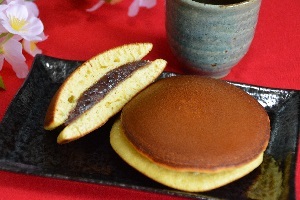
Dorayaki
Dorayaki is a Wagashi which consists of two small pancake-like patties made from flour, egg and sugar wrapped around a filling "an".
"Dora" means gong. It looks like gong.
By the way, it is Doraemon's favorite food.
("Doraemon" is the leading character of Japanese popular manga for children, and he is a robotic cat which came from the future.)
Monaka
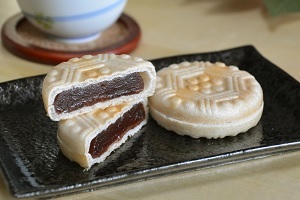
Monaka
Monaka is a Wagashi made of "an" filling sandwiched between two monaka shells.
The monaka shell is thin and crispy, and it is similar to a wafer.
In traditional monaka, "an" paste filling is the star of the confection.
Major confectionery manufacturers sell the products consisting of ice cream sandwiched between Monaka shells.
Yokan
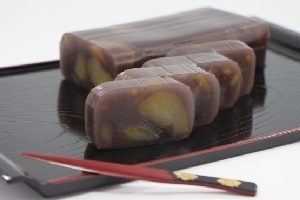
Yokan with chestnuts
Yokan is a wagashi made of "an", agar, and sugar. "O" in the word is pronounced long, so it is read as "Yōkan".
Agar is called "Kanten" in Japanese, and is made from a mucilaginous substance extracted from a seaweed called "tengusa" (red algae).
It functions similarly to gelatin, so Yokan is like hard jelly.
It is usually sold in a block form, and eaten in slices.
It is very sweet confection.
There are also varieties of Yokan with matcha (powdered green tea) mixed into "an" as well as those containing whole chestnuts in autumn.
Mizu-Yokan
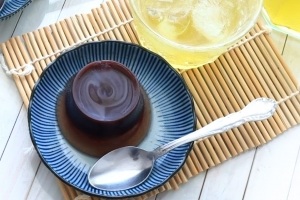
Mizu-Yokan is a kind of Yokan.
It is made with a higher water content and less agar than regular yokan.
So, it is very soft and is sold in small cups.
Genrally, Mizu-Yokan is eaten chilled from the refrigerator.
It is popular as a refreshing summer dessert.
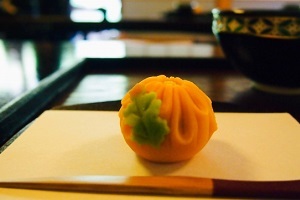
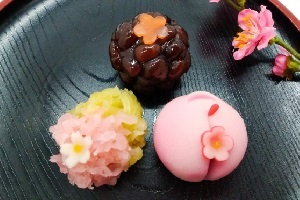
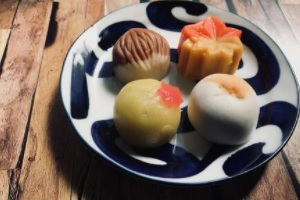
Jo-namagashi
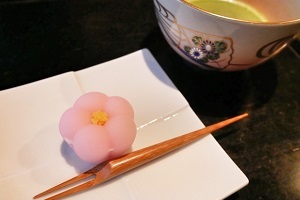
Jo-namagashi means high-grade Japanese fresh confections.
("O" of the word is pronounced as a long vowel like "Jō-namagashi".)
Shiro-an (white an) is blended and kneaded together with "gyuhi" (a special and soft type of mochi).
The craftsmen apply various colors and add artistic detailing to it.
They express the natural beauty of the changing seasons in each individual confection.
it is Jo-namagashi.
Jo-namagashi are sold as top-quality confections at long-established Japanese sweet shops and similar establishments.
They are mainly enjoyed at tea ceremony and celebratory occasions.
Wagashi made at street stalls
The following Wagashi are made and sold at street stalls and supermarkets.
You may try to taste them easily when you travel in Japan.
Taiyaki
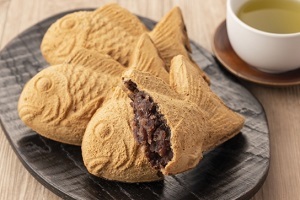
Taiyaki is a fish-shaped cake.
The batter from wheat flour is poured into a fish-shaped mould for each side.
And "tsubu-an" is put on one side and the mold is closed.
Then, it is cooked on both sides until golden brown.
Recently, versions filled with custard cream or chocolate have also appeared.
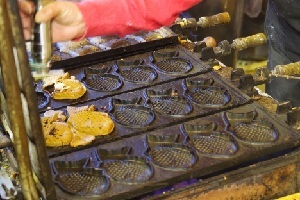
Making Taiyaki
As the name of this confection suggests, this fish is "Tai" (sea bream).
Of course, no fish is used in taiyaki.
In Japan, Tai is considered an auspicious fish and is frequently served at celebrations and similar occasions.
So, it is said that the auspicious symbol was adopted for the shape of this confection in the 19th century.
Imagawayaki
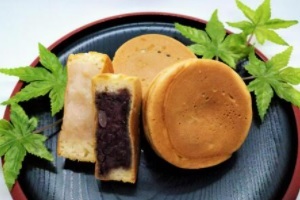
Imagawayaki is a round Wagashi.
The size is about 7 centimeters in diameter and about 2.5 centimeters thick.
The batter from wheat flour is poured into a round mould and "an" is placed on top.
Another batter is poured into a round mold and cooked, then the previously prepared batter with "an" is placed on top, acting like a lid.
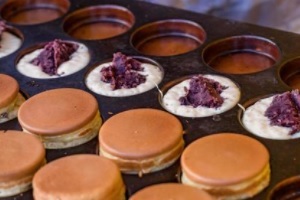
Making Imagawayaki
It is standard to fill the inside with "an".
Recently, Imagawayaki filled with ingredients such as white bean paste, custard cream, chocolate, and cream cheese has also appeared.
It is said that Imagawayaki appeared in the late 18th century.
It subsequently spread across the country, but was given various names depending on the region.
So, in some stands, it is called "Oobanyaki" or "Kaiten-yaki".
Wagashi like cookie or cracker
Senbei
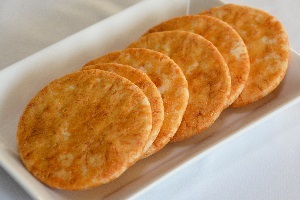
Senbei of shoyu taste
Senbei is the generic name of Wagashi like cookie or cracker.
Glutinous rice, wheat flour or potato starch is kneaded, shaped into a thin form, and baked over fire.
Some senbei are made by frying in oil.
Senbei from glutinous rice are generally seasoned on the surface.
They are brushed with soy sauce or mirin, or coated with salt or sugar.
Some varieties are coated with seaweed or sprinkled with sesame seeds.
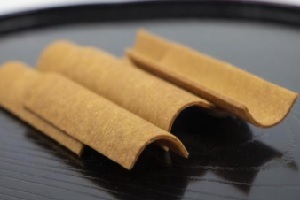
Sweet senbei "Yatsuhashi" in Kyoto
On the other hand, senbei from wheat flour are usually mixed sugar and egg, so they have sweet taste.
It is similar to cookie, but the senbei of this type is generally crisper than cookie.
This type of Senbei is also a specialty found in souvenir shops at many tourist destinations across Japan.
Yatsuhashi in Kyoto is famous for this type of Senbei.
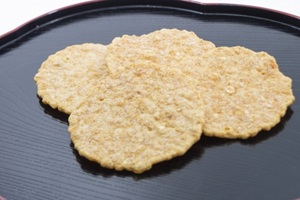
Shrimp senbei in Aichi Prefecture
Senbei from potato starch are mainly mixed with seafood such as shrimp and is baked.
Shrimp Senbei is a specialty product of Aichi Prefecture in the Tokai region, and there are long-established manufacturers of them.
There are also products that are manufactured in factories as snack foods and sold in stores.
Arare
Arare is a type of bite-sized senbei made from glutinous rice.
The size of Senbei is usually over 4 to 10 centimeters.
But, because arare is small, you can eat one after another.
Like senbei, shoyu or salt is mainly coated.
And some arares are colored.
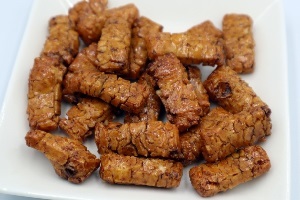
Arare of shoyu taste
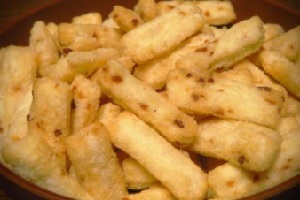
Arare of salt taste
Japanese Candy
Candy is called "ame" in Japanese.
The ingredients for Japanese "ame" are rice starch and sugar.
So, it has mild sweetness.
Of course, there are "ame" with Japan-specific flavor and form.
And, there are also colorful "ame" styled like small handicrafts.
In Japan, many stalls open around shrine and temple during the festival.
At that time, candy apple is popular. ("Ringo-ame" in Japanese)
It is an apple coated with melted "ame" and strawberry and some fruits are used recently.
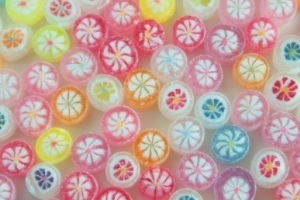
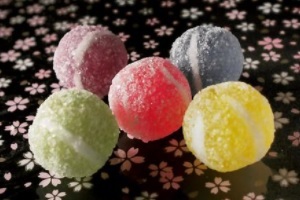
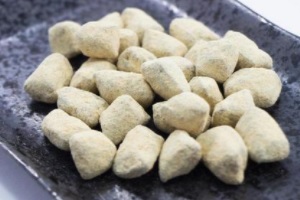
Traditional Japanese ame
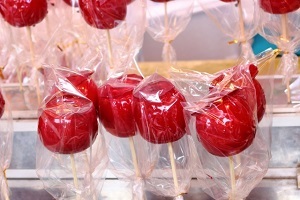
Ringo-ame sold in stall
Dango
Dango is the dumpling made from rice flour.
Generally, 3 to 5 dangos, each 2.5 to 3.5 centimeters in diameter, are served on a skewer.
Plain dumpling is slightly sweet because a little sugar is added to it.
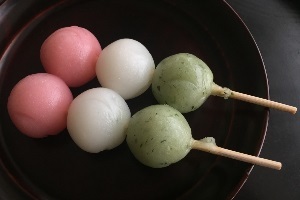
Hanami Dango
The most typical style of dango is "Hanami Dango", and it is sold in spring.
"Hanami" means "Cherry blossom viewing".
Three-colored dumplings are skewered on a stick.
Pink symbolizes cherry blossoms (Arrival of spring), white represents lingering snow (Remnant of winter), and green signifies fresh greenery (Sign of summer).
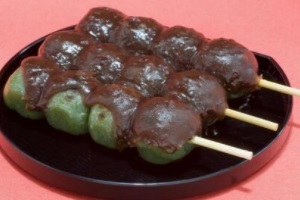
Yomogi (Mugwort) Dango with An
There are many different varieties of dango that the various seasonings served on or with it.
Most popular seasonings are "an".
"An" is poured over the dumplings arranged on the plate.
The simple flavor of dumplings is complemented by sweet "an", so the dango has a more authentic Japanese-confectionery style.
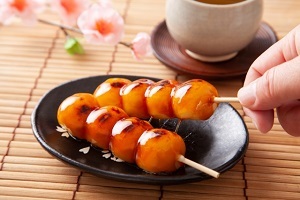
Mitarashi Dango
"Mitarashi Dango" is also popular.
The dumplings are lightly browned over the fire.
Then, the dango is completely coated in a syrup made from soy sauce, sugar and starch.
Mitarashi dango originated at Shimogamo Shrine in Kyoto.
So, at temple and shrine festivals, there are always the stalls selling Mitarashi dango.
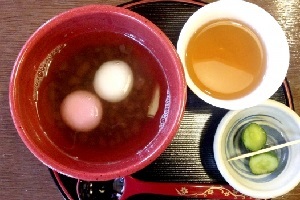
Shiratama Zenzai
"Shiratama" is a dango made from special rice flour.
It has a smooth surface and has chewier texture than regular dango.
Shiratama is not eaten on skewers.
Instead, it is used as a topping for the sweets served in bowls such as Anmitsu, Zenzai, Shiruko described later.
Seasonal confectionery
Sakura-mochi
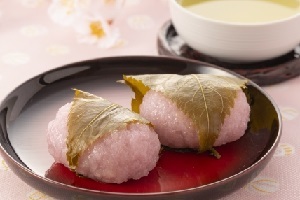
Sakura-mochi is made in spring.
Sakura is the cherry tree which is the symbol of Japan in spring.
Sakura-mochi is made by wrapping "an" in pink mochi or glutinous rice.
Additionally, it is wrapped in a salted cherry leaf.
The cherry leaf is edible.
Of course, it is a little salty but has refreshing taste.
Kashiwa-mochi & Chimaki
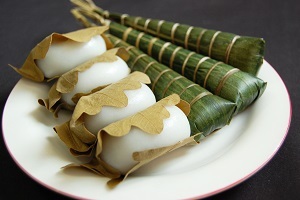
May 5th is Children's Day, and it is a day to promote the happiness and well-being of children.
For this day, Kashiwa-mochi and Chimaki are made.
Kashiwa-mochi is made by wrapping "an" in white mochi.
Additionally it is wrapped in an oak leaf.
The oak leaf is not eaten.
Chimaki is a kind of dango.
Sweetened glutinous rice is shaped into a long and slender cone, and is wrapped in bamboo leaves.
It is tied with materials such as rush grass, and then it is steamed.
Kuzu-mochi
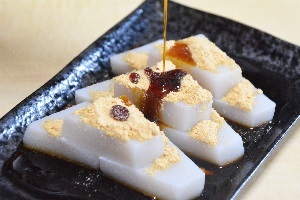
Kuzu-mochi with soybean flour
Brown syrup is poured
Kuzu-mochi is a confection using the flour of "kuzu".
Kuzu is a plant called as arrowroot in English and grows in Eastern Asia.
The flour is made from the root, and kuzu has been used as an ingredient of Japanese sweets.
The flour and sugar is boiled in water, then it becomes like translucent and hard jelly.
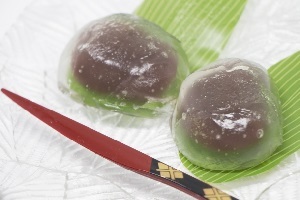
Kuzu-manju, An wrapped with kuzu
Because of the cool appearance, it is used as the sweets in hot season.
Kuzu-manju is a type of manju made by wrapping "an" in translucent kuzu dough.
The best way to enjoy it is to eat it slightly chilled.
Because kuzu is the special ingredientsd, these can primarily be purchased at long-established Japanese confectionery shops.
Botamochi / Ohagi
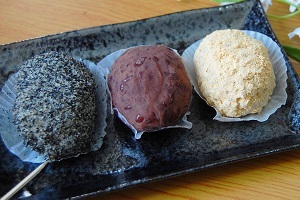
Botamochi or Ohagi is the confection that thick "an" is hand-packed around pre-formed balls of rice.
Sometimes, they are coated with Kinako (Powder of roasted soybesns) instead of "an".
Since old days, it was made at home when community festivals or Buddhist service.
The confection made for spring festival is "Botamochi" and one made for autumn festival is "Ohagi".
But, you can find it at any Japanese-style confection store.
Confectionery served at cafe
Mitsumame, Anmitsu
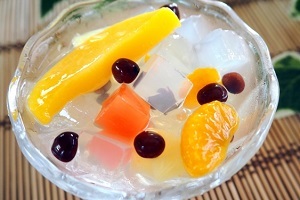
Mitsumame
Mitsumame and Anmitsu are popular desserts served in a bowl.
Mitsumame is a dessert with small cubes of agar, boiled peas and a variety of fruits such as peach slices, mikan, pieces of pineapple and cherries in syrup.
There is also a menu adding ice cream.
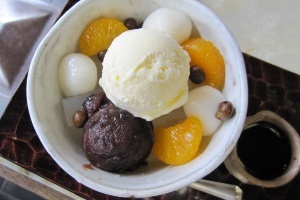
Anmitsu with ice cream
Anmitsu is a dessert that "an" is added on Mitsumame.
Agar is called "Kanten" in Japanese, and is made from a mucilaginous substance extracted from a seaweed called "tengusa" (red algae).
It is like jelly without taste and smell.
The syrup is usually served in a small pot, and you can pour onto the bowl before eating.
Zenzai, Shiruko
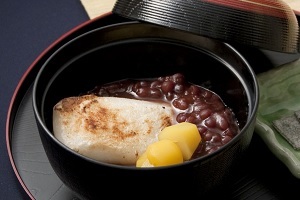
Zenzai
Zenzai is made by simmering azuki beans and sugar.
Commonly mochi, shiratama or chestnuts are topped on it.
Zenzai is sweet and warm.
It is served in a bowl and eaten with chopsticks.
As it is a warm food, Zenzai is mainly eaten in winter.
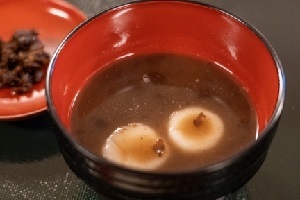
Shiruko
In Zenzai, azuki beans keep the original shape.
If azuki are turned into paste before cooking, it is called Shiruko, or politely Oshiruko.
It is like sweet azuki soup.
However, since it is essentially the same food as Zenzai, the distinction between Zenzai and Shiruko is often blurred depending on the region.
Amazake
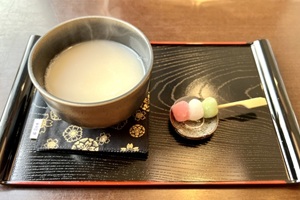
Amazake and Dango
Amazake is a sweet, low-alcohol or non-alcoholic drink.
The name means "sweet Sake".
Amazake is a drink made by adding sugar to sake lees which are the sediment left over from brewing sake.
It is a white and slightly thick beverage that tastes like sweet sake.
You can drink it at some cafes or teahouses.
And, it is also sometimes sold as a canned beverage in vending machines.
There are two types of Amazake:
One containing a small amount of alcohol and another containing none at all.
So, it is necessary to check the label if you need to drive or you want to give it to the child to drink.
Kakigori
Kakigori is a dessert made from shaved ice flavored with syrup.
Of course, it is served mainly in midsummer.
"O" in the word is pronounced long, so it is read as "kakigōri".
White shaved ice like fresh snow is heaped up in a bowl and colorful syrup is put on it.
Popular flavor syrup are strawberry (red color), lemon (yellow color), melon (green color) and blue-Hawaii (sky blue color and sweet-and-sour taste).
You can add on condensed milk to these flavor.
Popular Japanese flavors are Ogura ("an") and Uji-kintoki (green tea syrup and "an").
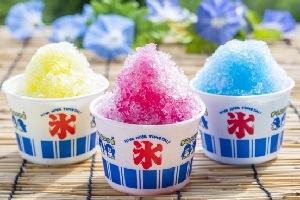
Kakigori of various syrup
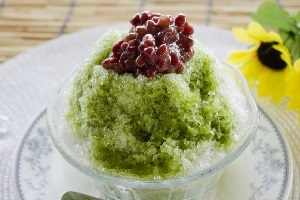
Kakigori of Uji-kintoki