
Yamagata Prefecture [山形]
Outline of Yamagata Prefecture
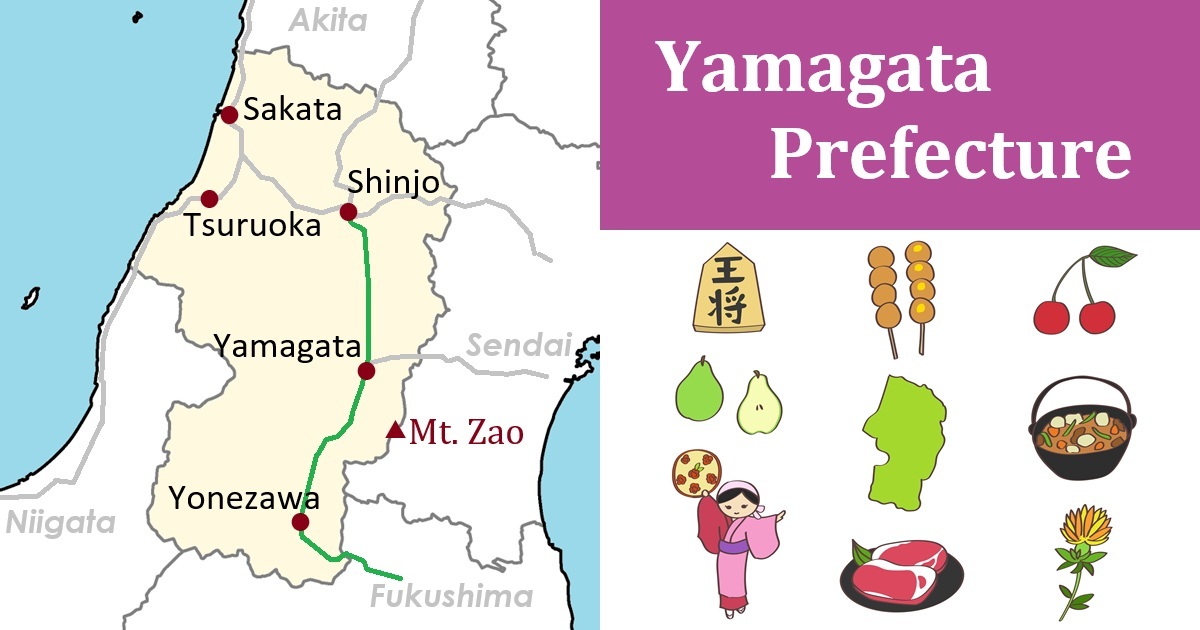
Yamagata Prefecture is located on the Sea of Japan side of central Tohoku Region.
Whole border line of the prefecture is on some mountain ranges.
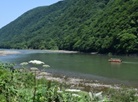
Most rivers from the mountains flows into Mogami River.
Mogami River flows through the center of prefecture.
It originates in the mountains in the southern part of the prefecture, flows northward, turns westward in the northern part of the prefecture, and flows into the Sea of Japan.
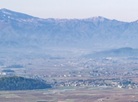
Most cities and towns are located in the basins or the plains formed by the Mogami River.
Therefore they call it "Mother River" in Yamagata Prefecture.
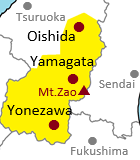
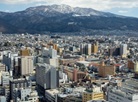
The prefectural capital is Yamagata city, which is in the easternly center of the prefecture.
Sendai city is located only 50 km east of Yamagata city.
There is the historic castle city of Yonezawa at the southern edge, and the "Yonezawa beef" produced there is famous nationwide.
Because Yamagata Shinkansen reaches Yamagata city and Shinjo city, it is relatively easy to visit there from Sendai or Tokyo.
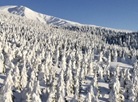
In winter, snow falls in the central and southern parts of Yamagata Prefecture during winter, and the mountainous areas are regions of heavy snowfall.
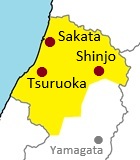
The area around the mouth of the Mogami River is known as the Shonai region and is a major grain-producing area.
Historic cities such as Sakata and Tsuruoka are located there.
Main industry in Yamagata Prefecture is agriculture.
Especially, Yamagata cherries are famous.
Tourist spots in Yamagata Prefecture
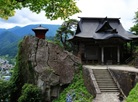
Southern area
Shonai area and the northern area
Local foods in Yamagata Prefecture
Imoni
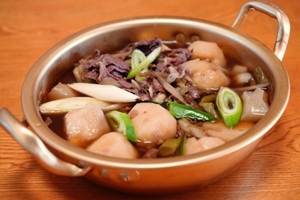
Taro, sliced beef, konnyaku and green onion are simmered together in a pot in soy sauce-based dashi broth with added sugar.
"Imo" means taro, and "ni" means simmering.
In some regions, pork is used, or miso added to dashi broth.
In Yamagata Prefecture, the standard practice is to cook Imoni in a large pot outdoors and enjoy it together in a large group like a party.
Travelers can enjoy Imoni at izakaya (Japanese pub) and restaurants serving local cuisine in Yamagata city.
Local specialties in Yamagata Prefecture
Cherry
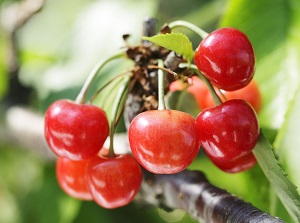
Photo by Yamagata Prefecture
Cherry is called "sakuranbo" in Japanese.
Yamagata Prefecture has more than 70 percent share of the Japan's cherry production.
The popular cultivar is named "Sato-nishiki", and it is different from "Somei-Yoshino" which is the popular cherry blossom in Japan.
It is brilliant red and tastes sweet, so commonly we eat it raw.
Because it has a high quality, the price is expensive.
The picking season is late June.
Yonezawa Beef
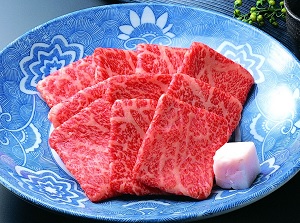
Photo by Yamagata Prefecture
Yonezawa Beef is produced around Yonezawa city in the south part of Yamagata Prefecture.
It is known as one of tasty beefs in Japan.
In 1871, a British teacher who was invited to Yonezawa for English education ate this beef, and he was surprised at the excellent taste.
So, when he left Yonezawa, he took a cow to Yokohama city, his primary destination in Japan.
Since that, Yonezawa beef has become famous.
There are several restaurants around JR Yonezawa Station that serve authentic Yonezawa beef.
Safflower
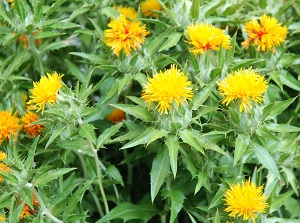
Photo by Yamagata Prefecture
Safflower is called "benibana" in Japanese.
It symbolizes Yamagata Prefecture.
In the 18th century, this area was one of the largest production centers of safflower in Japan.
The flower is yellow, but processed flower shows red color in water.
So it has been used as important dyer.
But since the late 19th century, sufflower in Japan had declined rapidly by increase of imported Chinese safflower.
Now there are not so many farms of safflower.
But when the blossoms open up in July, the events for safflower are held at each farm.
Pieces of Shogi (Japanese chess)
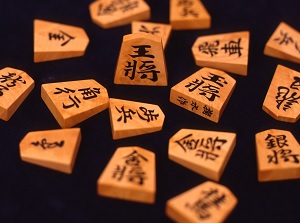
Photo by Yamagata Prefecture
Shogi is a Japanese board game, and it is translated as "Japanese chess" in English.
Although it is a board game, professional players exist and some title matches are held officially.
Unlike Western chess, the board of Shogi has nine columns and nine rows.
And, there is a unique rule that allows you to utilize the opponent's captured piece as your own piece.
The pieces are pentagon-shaped and are made by carving from wood.
On both sides of each piece, a name of the role is written with black lacquer or carving.
Tendo city to the north of Yamagata city produces more than 90 percent of the pieces of Shogi in Japan.