
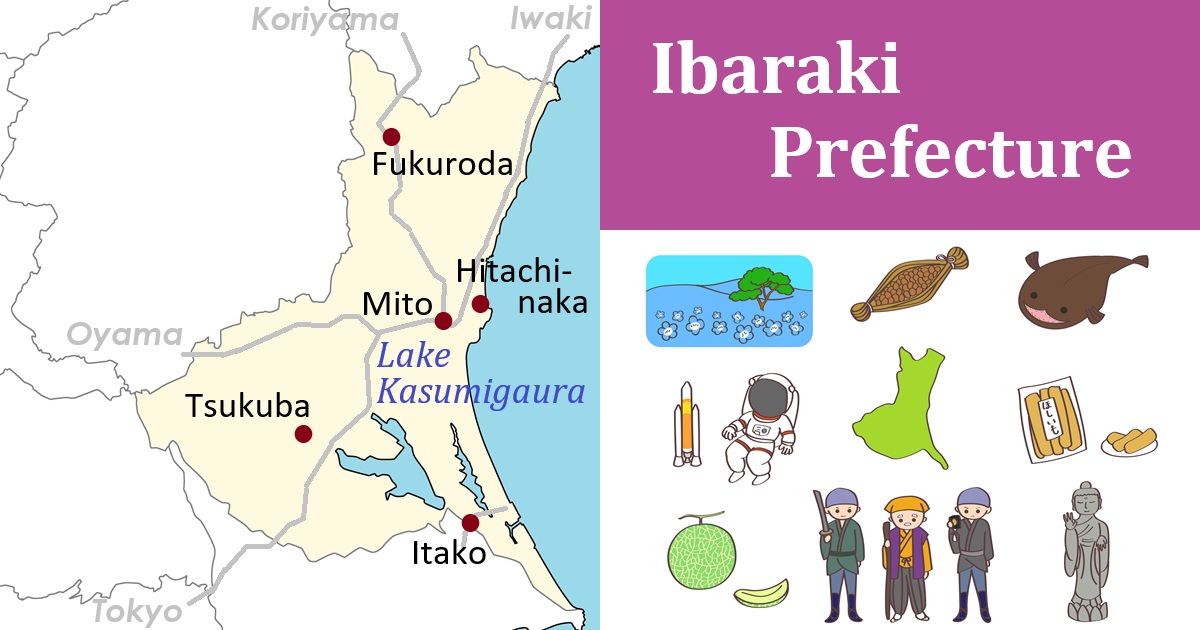
Ibaraki Prefecture [茨城]
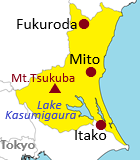
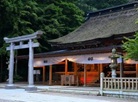
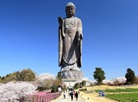
Tourist spots in Ibaraki Prefecture



Local foods in Ibaraki Prefecture
Ankou-nabe
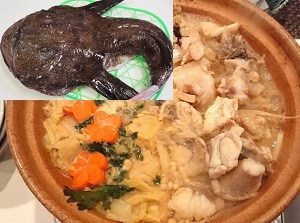
Ankou and Ankou-nabe
"Ankou" is one of deep-sea fish, and it is called "anglerfish" or "goosefish" in English.
Many ankou are caught off the east coast of Ibaraki Prefecture.
Ankou has a grotesque body, but it tastes good.
Not only its meat but also inner parts, skins, gills and fins are eaten.
Especially the liver (it is known as "an-kimo" in Japanese) is similar to "foie gras" because ankou is a tremendous eater in the sea.
So it is much-prized.
Ankou-nabe is one pot stew with all parts of anko, vegetables and tofu.
The soup are mixed with either shoyu (soy sauce) or miso.
From late autumn to early spring, you can eat it at any ryokans or restaurants in Mito city and the northern area in Ibaraki Prefecture.
Mito Natto
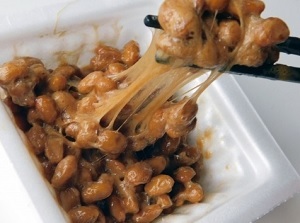
Natto is one of the popular Japanese foods, and is made by fermenting the boiled soy beans.
(The last "o" in "natto" is pronounced long as "nattō".)
It is rich in nutrients and is a healthy food, but it has a distinctive smell.
So most foreigners probably don't like it.
Originally natto had been made locally as a home industry.
But, in early 20th century, a natto maker in Mito began to mass-produce natto industrially.
Since that, most Japanese people associate "natto" with "Mito".
The restaurants in Mito city offer a variety of dishes featuring natto.
Local specialties in Ibaraki Prefecture
Melon
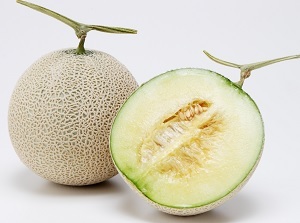
Melon is one of popular fruits in Japan.
It is expensive, so it is often used as a gift in Japan.
As a result, many Japanese people can sometimes eat melon.
Ibaraki Prefecture is Japan's leading producer of melons, accounting for one-fourth of the nation's total production.
Especially, Hokota city at the southeast part of the prefecture is the center of the production.
Some varieties of melon are cultivated in Ibaraki Prefecture and every melon has its unique characteristics.